PERSISTENT CONCUSSION RECOVERY
Persistent Concussion Recovery: What to Do When Symptoms Do Not Go Away
The scan may be normal. The injury may have happened months or years ago. You may have completed vision therapy, vestibular exercises, aerobic rehabilitation, medication trials, or weeks in a dark room. Yet headaches, dizziness, pressure, fatigue, poor sleep, tinnitus, sensory sensitivity, emotional volatility, and brain fog still control your day.
That does not mean the symptoms are imagined. It means the recovery plan may not yet have identified every system contributing to them.
What are persistent concussion symptoms?
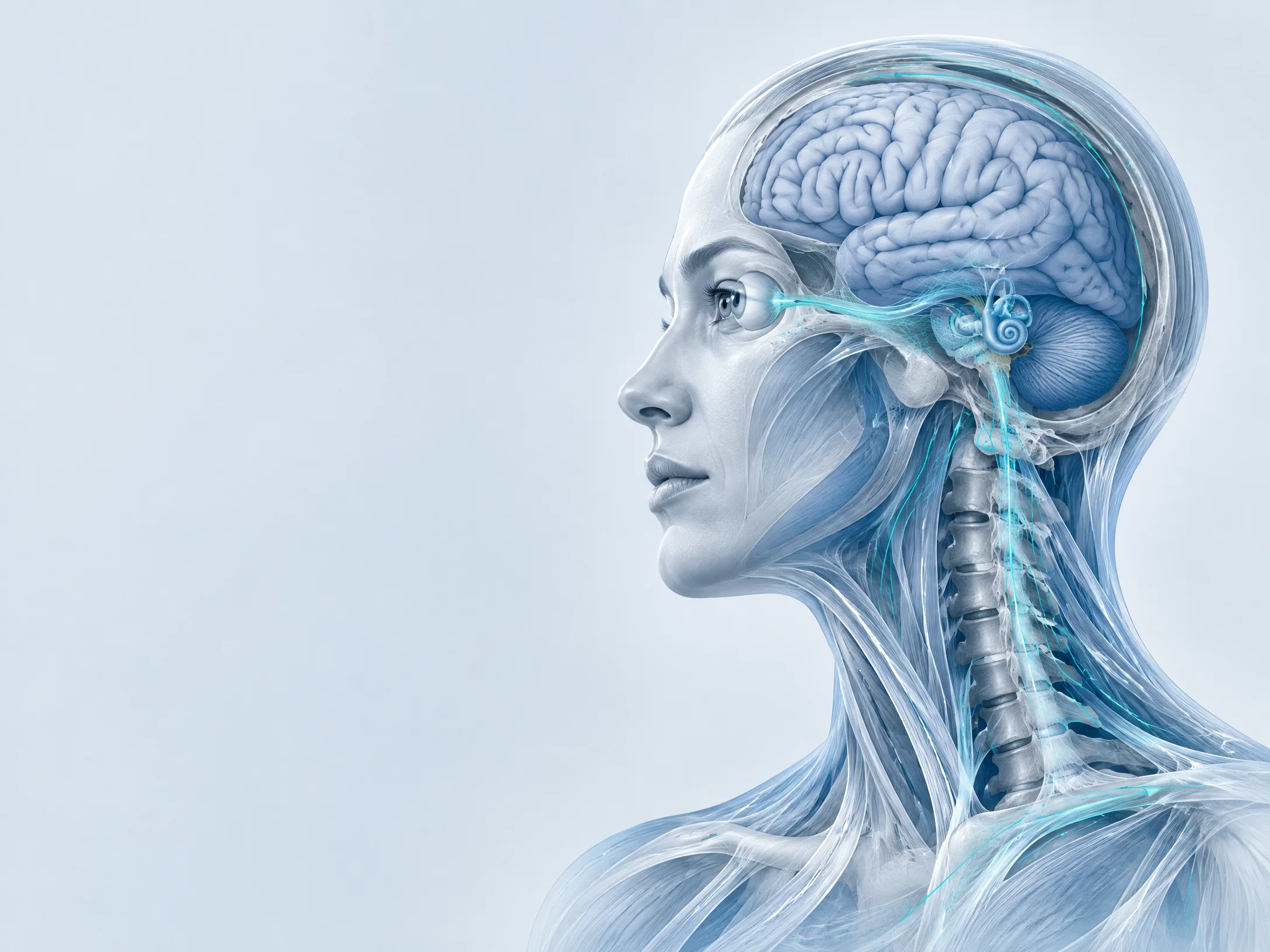
Persistent concussion symptoms are symptoms that continue for more than four weeks after a concussion. They may include headache, dizziness, fatigue, sleep disturbance, sensory sensitivity, cognitive difficulty, mood changes, and neck pain. Current guidance supports reassessment of the individual symptom pattern and contributing systems rather than passive waiting or a one-size-fits-all recovery timeline.
Persistent Concussion Symptoms Are a Signal to Reassess the System
A concussion is a mild traumatic brain injury caused by force transmitted to the brain. It can disrupt neurological function even when routine structural imaging shows no visible damage. When symptoms remain beyond four weeks, current concussion literature describes them as persisting symptoms. These symptoms require a new assessment, not more passive waiting.
“A normal scan does not automatically mean normal function.”
Persistent concussion is rarely one isolated problem. Symptoms can be maintained by several interacting contributors. The question is not whether one valid therapy failed. The question is whether the hierarchy and sequence of care have identified the systems still adding load.
How to Tell if You May Have a Concussion
A concussion can follow a direct blow to the head, face, or neck, or a force elsewhere in the body that moves the head rapidly. Loss of consciousness is not required. Symptoms can appear immediately or evolve over hours.
Cognitive
Brain fog, slowed processing, memory changes, word-finding difficulty, reduced concentration, and reduced tolerance for complex decisions.
Physical
Headache, head pressure, neck pain, migraine, facial tension, nausea, fatigue, and altered exertion tolerance.
Visual and vestibular
Dizziness, imbalance, motion sensitivity, blurred vision, visual intolerance, and difficulty in busy environments.
Emotional and behavioral
Irritability, anxiety, sadness, emotional outbursts, or feeling unlike yourself.
Sleep and fatigue
Insomnia, waking unrefreshed, unusual fatigue, or a changed sleep pattern.
Sensory and cervical
Sensitivity to light or sound, tinnitus, facial tension, jaw symptoms, and cervical discomfort.
Emergency Warning Signs
Seek emergency medical assessment immediately after a head injury for a worsening headache, repeated vomiting, seizure, increasing confusion, unusual agitation or behavior, weakness or numbness, slurred speech, one pupil larger than the other or double vision, loss of consciousness, increasing difficulty waking, or significant deterioration after the injury.
Do not use an online checklist to rule out a serious injury.
Why Concussion Symptoms Can Persist
Persistent symptoms may involve overlapping contributors. Not every person has every problem. The purpose of assessment is to establish the pattern, not to impose a theory.
Cervical
Cervical injury, neck pain, range-of-motion limits, and cervicogenic symptoms can contribute to a persistent pattern.
Vestibular and visual
Dizziness, motion sensitivity, balance dysfunction, oculomotor problems, and visual intolerance may require targeted care.
Headache and migraine
Headache mechanisms can remain active and should be assessed rather than assumed to be a single concussion output.
Sleep and autonomic regulation
Sleep disruption, fatigue, exertional symptoms, and autonomic load can limit rehabilitation tolerance.
Psychological and environmental load
Stress, trauma, work demands, medication effects, and sensory exposure can interact with recovery.
Cranial and neurofascial assessment
Cranial, cervical, breathing, movement, and sensory restrictions may be assessed as part of an integrated clinical plan.
The neck deserves specific attention. A systematic review found that cervical symptoms were common after concussion and especially prevalent in people with persistent symptoms. Neck pain at the first evaluation was associated with a greater risk of prolonged symptoms. The association does not prove causation. It does justify careful differentiation of cervical contributors.
What Current Evidence Says About Rest and Exercise
Prolonged isolation in a dark room is no longer considered a complete recovery strategy. Current sport-concussion guidance supports relative rest during the first 24 to 48 hours, followed by a gradual return to daily activity as tolerated. A 2023 systematic review found that early light physical activity and individually prescribed subsymptom aerobic exercise can support recovery for some people, while strict rest until all symptoms disappear is not effective.
Exercise still needs the right dose. If walking, cycling, or strength work creates a large or prolonged symptom flare, the program may be too aggressive or another contributor may need treatment first. Recovery is a progression, not a test of willpower.
Sources: Amsterdam 2022 Consensus Statement (published 2023); Leddy et al., 2023.
Why Vision Therapy or Exercise May Not Be Enough
Vision therapy can be appropriate when assessment identifies an oculomotor or visual problem. Vestibular rehabilitation can be appropriate for dizziness and balance dysfunction. Aerobic exercise can help restore exertion tolerance. Psychological care can support trauma, mood, and adjustment. Each addresses a real part of recovery.
The limitation appears when one valid treatment is expected to solve every symptom. If the cervical region remains restricted, sensory input stays provocative, sleep is impaired, or the nervous system cannot tolerate the treatment load, progress may stall. The answer is not to declare the person resistant. The answer is to reassess the hierarchy and sequence of care.
The Dynamic Brain Healing™ Approach
Dynamic Brain Healing™ was created by Simone Fortier after more than 30 years of clinical work with professional and Olympic athletes, practitioners, and people whose symptoms had not resolved. It developed from a recurring clinical observation: concussion care often evaluates cognition, balance, and vision while giving less attention to the cranial, cervical, neurofascial, and regulatory restrictions that may continue to load the system.
Dynamic Brain Healing is a proprietary hands-on clinical and practitioner-training framework taught through the Fascia Training Institute. Practitioners assess patterns involving the cranium, cervical region, eyes, ears, jaw, breathing mechanics, fascia, movement, and nervous-system regulation. The aim is to reduce restrictive input, improve available motion, support regulation, and create better conditions for the next stage of rehabilitation.
This is not a replacement for medical diagnosis, imaging when indicated, vestibular or visual rehabilitation, psychological care, or graded exercise. It adds a structural and neurofascial layer within appropriate interdisciplinary recovery.
A Better Hierarchy for Persistent Concussion Care
1. Identify emergency and medical concerns
Review injury history, neurological signs, medication changes, sleep, headache, and endocrine symptoms.
2. Measure the current pattern
Document symptoms, cervical range of motion, balance, visual tolerance, exertion tolerance, sensory triggers, and functional capacity.
3. Reduce the dominant source of load
Treatment may involve cervical, vestibular, visual, autonomic, psychological, sleep, headache, or neurofascial care depending on findings.
4. Restore daily function
Build from ordinary activity toward cognitive and physical demand within an individualized threshold.
5. Progress and retest
Recovery decisions should reflect repeatable capacity, not a single good day or the absence of one symptom.
6. Reassess when symptoms return
Return to work, learning, sport, and performance should be based on repeatable function—not an arbitrary timeline.
Return to Work and Daily Function
Not everyone with persistent symptoms is an athlete. Executives, entrepreneurs, practitioners, parents, and working professionals still need their brains to perform. Screens, meetings, noise, driving, travel, decision-making, memory demands, and emotional regulation can all expose a system that has not yet restored tolerance.
Track what happens after the demand—not only during it. Delayed increases in headache, fatigue, fog, irritability, or sensory sensitivity change the treatment question. Family and financial pressure can force activity before capacity is reliable. A recovery plan should protect function while it rebuilds it.
What CTE Means—and What It Does Not Mean
Chronic traumatic encephalopathy is a neurodegenerative disease associated with long-term exposure to repeated head impacts. It is not the same as one concussion, and symptoms such as depression, irritability, memory changes, or headaches do not prove that a living person has CTE. At present, definitive diagnosis depends on examination of brain tissue after death.
No hands-on treatment, supplement, scan, or exercise program should be marketed as a cure for CTE. People with a history of repetitive head impacts can still be evaluated and treated for identifiable, potentially modifiable problems such as headache, sleep disruption, cervical dysfunction, mood symptoms, vestibular problems, or reduced exercise tolerance.
Founder Perspective
“I did not create Dynamic Brain Healing because concussion needed another symptom checklist. I created it because too many capable people were being managed without being fully assessed. Their scans were called normal. Their lives were not. When the expected therapies did not restore function, the person was often blamed for the failure. My work begins where that assumption ends. We look for the restriction, load, and sequence the system has not yet resolved.”
Simone Fortier
Founder, Fascia Training Institute
Creator of Dynamic Brain Healing™
When Recovery Stalls, the System Needs a New Question
Persistent symptoms do not automatically mean recovery is impossible. They may mean that the current plan has not yet identified or sequenced every contributing system.
Frequently Asked Questions
What are persistent concussion symptoms?
Symptoms that continue for more than four weeks after concussion are commonly described as persisting symptoms. They may include headache, dizziness, fatigue, cognitive difficulty, sleep disturbance, sensory sensitivity, mood changes, and neck pain.
How long can concussion symptoms last?
Recovery time varies. Reassessment is appropriate when symptoms are not improving, worsen with activity, interfere with work or school, or continue beyond four weeks. New neurological danger signs require urgent medical care.
Can a concussion exist when a scan is normal?
Yes. Routine imaging is important for identifying structural injury when indicated, but concussion commonly produces functional disturbance that may not appear on a standard CT or MRI.
Is a dark room still recommended after concussion?
Current guidance supports relative rest for the first 24 to 48 hours rather than prolonged complete rest. Activity should then increase gradually within an individualized symptom threshold.
Can exercise help concussion recovery?
Appropriately prescribed light activity and subsymptom aerobic exercise may support recovery for some people. Exercise must be individualized. Severe, escalating, or dangerous neurological symptoms require medical reassessment rather than exercise progression.
Can neck problems cause concussion-like symptoms?
Cervical symptoms can contribute to or resemble aspects of a persistent concussion pattern. Because the same event can load the head and neck, assessment should differentiate cervical, vestibular, visual, headache, and other contributors.
Why did vision or vestibular therapy not resolve all my symptoms?
Vision and vestibular rehabilitation may be appropriate for identified problems. A valid treatment can still be incomplete if another contributor—such as cervical dysfunction, sleep disruption, headache, sensory load, or exertional intolerance—remains active.
What is Dynamic Brain Healing™?
Dynamic Brain Healing™ is Simone Fortier’s proprietary clinical and practitioner-training framework. It assesses cranial, cervical, neurofascial, sensory, movement, breathing, and nervous-system factors that may be relevant within appropriate multidisciplinary recovery.
Can Dynamic Brain Healing™ cure a concussion?
No single treatment cures every concussion. Dynamic Brain Healing™ may address restrictions that contribute to an individual symptom pattern and is designed to sit within appropriate medical and interdisciplinary care.
Is CTE the same as a concussion?
No. CTE is associated with long-term exposure to repeated head impacts and is not interchangeable with one concussion. Symptoms alone cannot confirm CTE, and definitive diagnosis currently requires postmortem brain-tissue examination.
When should I seek emergency care?
Seek urgent medical care for a worsening headache, repeated vomiting, seizure, increasing confusion, unusual agitation, weakness or numbness, slurred speech, unequal pupils or double vision, loss of consciousness, or increasing difficulty waking.
Can I return to work while I still have symptoms?
Return-to-work decisions should be individualized and based on repeatable functional capacity. The plan may need to account for screen exposure, meetings, driving, noise, travel, decision-making, cognitive endurance, and delayed symptom increases.
Research Sources
- Patricios JS, et al. Consensus statement on concussion in sport: the 6th International Conference on Concussion in Sport—Amsterdam, October 2022. British Journal of Sports Medicine. 2023;57(11):695–711.
- Leddy JJ, et al. Rest and exercise early after sport-related concussion: a systematic review and meta-analysis. British Journal of Sports Medicine. 2023;57(12):762–770.
- Rytter HM, et al. Nonpharmacological Treatment of Persistent Postconcussion Symptoms in Adults: A Systematic Review and Meta-analysis and Guideline Recommendation. JAMA Network Open. 2021;4(11):e2132221.
- Cheever K, et al. The Role of Cervical Symptoms in Post-concussion Management: A Systematic Review. Sports Medicine. 2021;51(9):1875–1891.
- Centers for Disease Control and Prevention. Signs and Symptoms of Concussion. CDC HEADS UP.
- Centers for Disease Control and Prevention. About Repeated Head Impacts. CDC Traumatic Brain Injury & Concussion. Updated 2024.
Related Resources
Existing FTI resources: Dynamic Brain Healing™ · Practitioner training · Brain Health Assessment · Brain Reset Program
Supporting resource pages in development: Concussion in Sport · ADHD and Concussion · Women and Concussion · Men and Concussion.
Medical disclaimer: This information is educational and does not replace medical diagnosis, emergency assessment, or individualized treatment. Seek urgent medical care for worsening or dangerous neurological symptoms.