
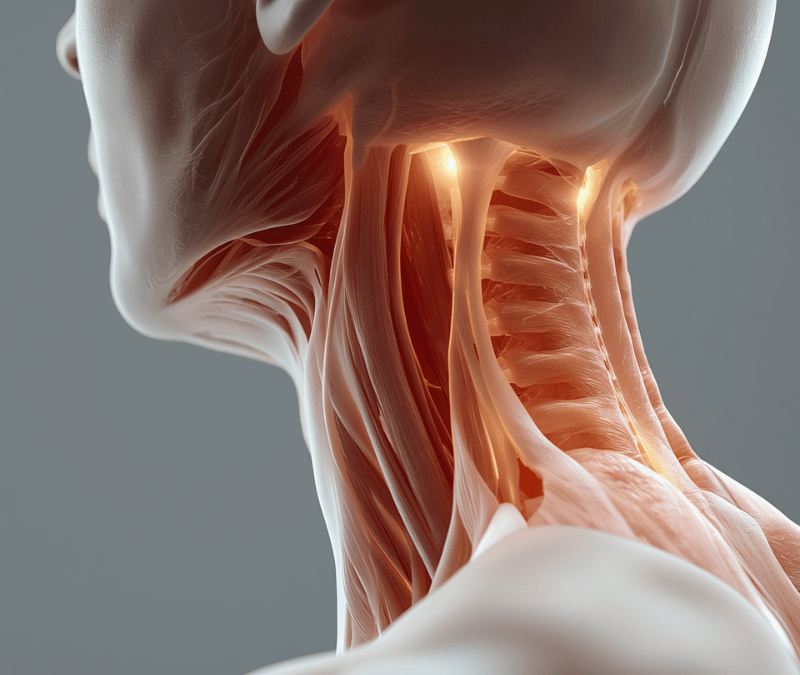
Chronic Headache, Neck Pain, and the Missing Piece — Fascia as the Bridge
Unremitting head and neck pain (UHNP) is a term many patients don’t know but live with daily. They describe it as constant tightness or pressure at the base of the skull, punctuated by spikes of severe pain. For some, it blends into chronic migraine. For others, it feels like endless tension.
What the Research Shows
Recent evidence suggests that UHNP is often caused by compression of the occipital nerves by surrounding muscles and fascia at the occipital ridge
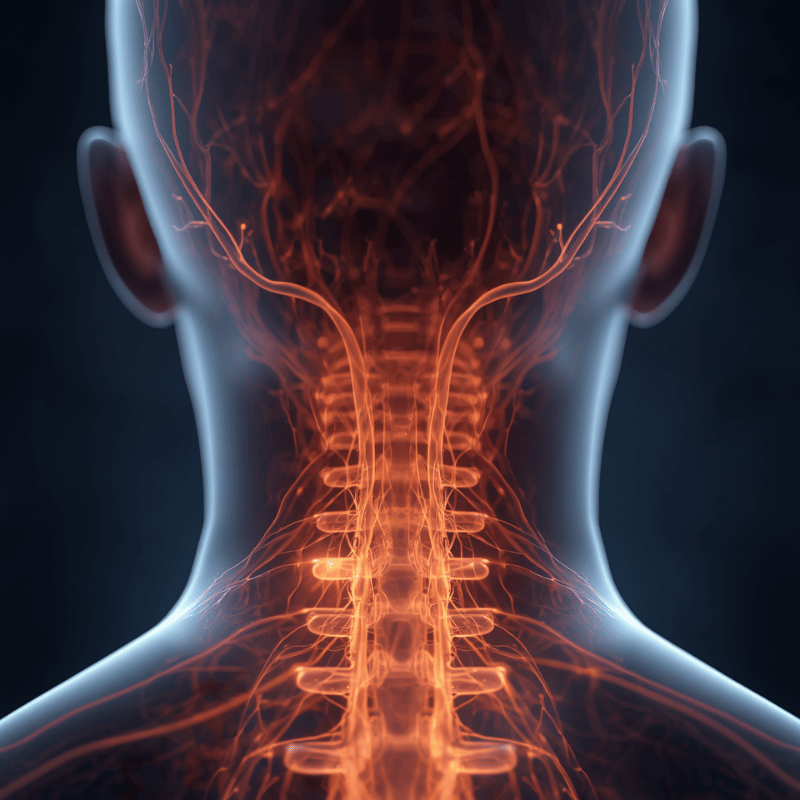
This compression causes local inflammation around the nerves and, through anatomical nerve pathways, can activate pain-processing centers inside the brain.
It’s not just pain. This nerve-fascia interplay may explain why patients also experience dizziness, nausea, light sensitivity, and even sleep disruption. Inflammation in fascia can trigger systemic responses that extend far beyond the neck.
Why This Matters for Aging, Athletes, and Trauma Recovery
For athletes with whiplash, professionals under chronic stress, or older adults with stiffening fascia, occipital nerve compression may be the “silent driver” of ongoing pain. In fact, studies show patients who undergo decompression surgery often experience lasting relief not just in the back of the head, but also in frontal migraine-like pain
This is a critical insight for fascia practitioners: releasing restrictions around the occiput, trapezius, and cervical fascia may reduce nerve irritation and calm the cascade of neurological symptoms.
A New Lens for Therapists
Instead of viewing migraines or chronic tension headaches only as neurological, we can expand the lens:
- Peripheral + Central: Pain can begin in fascia and nerves, then amplify through the brain.
- Fascia as Bridge: Releasing fascial compression can ease both local pain and central symptoms.
- Therapy with Impact: Techniques that restore fascial glide and reduce cervical muscle spasm may be just as vital as pharmaceuticals.
The fascia-brain connection isn’t a theory anymore. It’s evidence. And it may be the key to helping clients who have tried everything else and still live with pain.