
Persistent Concussion Symptoms in Calgary: When Recovery Has Stalled, the System Needs a Deeper Assessment
The scan may be clear. Your life may still feel completely different.
The headache is still there. Your sleep has changed. Bright light feels intrusive. You lose words, forget why you walked into a room, or reach the end of the workday with nothing left.
You may have been told that the concussion has resolved. Yet your capacity has not returned.
That gap matters. A normal scan does not mean every system involved in recovery has normalized. Concussion is a functional injury, and persistent symptoms can involve overlapping physical, cognitive, emotional, sleep, visual, vestibular and cervical factors.
For people searching for persistent concussion treatment in Calgary, the next step should not be another generic protocol. It should be a more precise assessment of what is still placing load on the system.
Persistent symptoms are not a failure of effort
Most people improve within days or weeks. A meaningful minority do not. Ontario’s Living Concussion Guidelines report that approximately 15% to 20% of adults continue to experience symptoms beyond one month. These symptoms may affect work, relationships, exercise tolerance and the ability to function under ordinary daily demands.
When symptoms persist, the problem is rarely solved by pushing harder. Recovery can stall when several systems are still compensating at the same time.
- Headaches, head pressure, neck pain or facial tension
- Dizziness, balance disruption or motion sensitivity
- Light and noise sensitivity
- Brain fog, slowed processing or memory changes
- Fatigue that is disproportionate to the activity performed
- Sleep disruption, irritability, anxiety or emotional volatility
- Symptoms that return under cognitive, physical or environmental load
These are not isolated inconveniences. They are outputs. The clinical question is what continues to drive them.
Why the neck and fascial system deserve attention
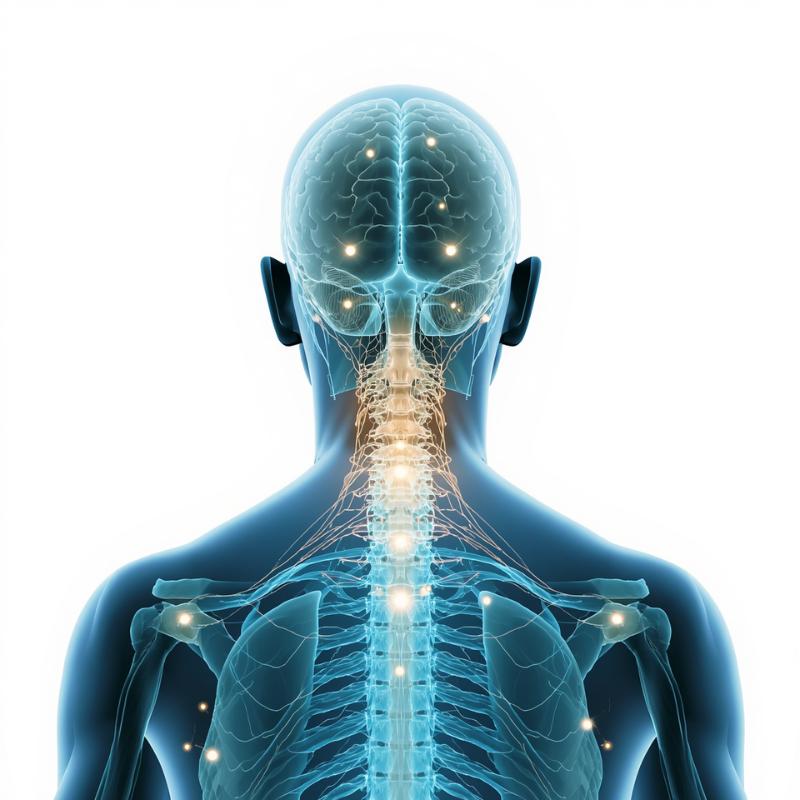
A concussion does not occur in a brain floating separately from the body. The same acceleration, deceleration, fall or collision that affects the brain can also load the upper cervical spine, cranial tissues, jaw, shoulders and the sensory systems responsible for orientation and balance.
The international Amsterdam concussion consensus recommends cervicovestibular rehabilitation when dizziness, neck pain or headaches persist beyond the early recovery period. That does not mean every persistent symptom comes from the neck. It means the cervical and vestibular systems should not be ignored.
Fascia is part of this larger picture. It is a continuous sensory and force-transmission system. Restriction through the neck, upper cervical region, jaw and cranium may change movement, protective tension and sensory input. For some people, addressing only the symptom without examining the system maintaining it leaves the recovery plan incomplete.
What Dynamic Brain Healing™ adds
Dynamic Brain Healing™ is Simone Fortier’s proprietary neurofascial process for assessing and addressing restrictions through the cranial, cervical, fascial and nervous systems. It is designed for persistent, complex presentations in which symptoms remain after the initial injury has passed.
The work begins with measurement. The Brain Health Assessment establishes a structured baseline across symptoms and functional patterns. The consultation then examines the history, symptom relationships, previous interventions and the conditions under which the system loses capacity.
When in-person care is appropriate, treatment is selected from the assessment rather than applied as a standard routine. Changes can be rechecked through symptoms, range of motion, balance, clarity and other relevant functional measures.
| Important: Dynamic Brain Healing™ is complementary care. It does not replace medical diagnosis, emergency assessment, medication management, vestibular or vision rehabilitation, mental-health care, or a medically supervised return-to-sport process when those services are indicated. |
A different starting point for Calgary patients
Calgary has strong acute and multidisciplinary concussion resources. But people with persistent symptoms often arrive at the same difficult point: they have completed the expected steps, yet headaches, fog, fatigue, dizziness or reduced tolerance remain.
The question is no longer simply, “Did you have a concussion?”
The better question is, “Which systems have not regained the capacity to manage the demands of your life?”
That is why the process does not begin with treatment alone. It begins with a baseline, a pattern analysis and a decision about what should happen next.

The first step
All concussion treatment and consulting pathways begin with the Brain Health Assessment and consultation. This can be completed online before any in-person care in Calgary.
- Complete the Brain Health Assessment.
- Meet with Simone to review the results, injury history and current limitations.
- Identify the patterns contributing to neurological load and inconsistent capacity.
- Determine whether the Brain Reset Program, in-person Dynamic Brain Healing™ treatment, additional clinical referrals, or a coordinated combination is most appropriate.
- Retest relevant measures so that progress is evaluated, not assumed.
When you should seek urgent medical care
Dynamic Brain Healing™ is not emergency care. After a new head injury, call 911 or go to the nearest emergency department for danger signs such as a worsening headache, repeated vomiting, seizure, unusual confusion or agitation, slurred speech, weakness or numbness, increasing drowsiness, inability to wake, one pupil larger than the other, or double vision.
Your symptoms are information
Persistent symptoms do not mean that nothing can change. They mean the system requires a more complete assessment.
If you are looking for persistent concussion treatment in Calgary, begin by establishing a measurable baseline. The purpose is not to force the brain to perform. It is to identify what is still restricting recovery and create the conditions for capacity to return.
Begin with the Brain Health Assessment: Start the Concussion Brain Reset process
In-person appointments are available by assessment in Calgary, Alberta.
Frequently asked questions
What are persistent concussion symptoms?
Symptoms that continue beyond the expected early recovery period may include headaches, dizziness, fatigue, cognitive changes, sleep disruption, light or noise sensitivity, mood changes and reduced tolerance for work or exercise.
Do I need a referral?
The Brain Health Assessment and consultation can be started directly online. Medical evaluation or referral may still be recommended depending on your history, symptoms and jurisdiction.
Can I begin before travelling to Calgary?
Yes. The assessment and consultation are completed online, allowing the initial pattern analysis to occur before in-person treatment is considered.
Is Dynamic Brain Healing™ the same as physiotherapy or vestibular rehabilitation?
No. It is a proprietary neurofascial process focused on cranial, cervical, fascial and nervous-system patterns. It may complement other indicated concussion services.
Does treatment guarantee recovery?
No ethical provider can guarantee an individual result. The process uses baseline and follow-up measures so that decisions are guided by the person’s response.
Editorial safety note
This article is educational and is not medical advice. Anyone with a suspected concussion should be assessed by a qualified healthcare professional. Dynamic Brain Healing™ does not provide emergency diagnosis or independent return-to-play clearance.