
Concussion, Cortisol, and the Brain That Cannot Stand Down
Most people believe concussion is an event. A hit. A fall. A single moment.
It is not.
Concussion is a change in how the brain manages load. And one of the first systems to absorb that change is the one that governs stress.
This is the gap no one is addressing. The symptoms that persist months after the injury are rarely about the original impact. They are about a stress system that never received the signal to stand down.
The Injury Beneath the Injury
When the brain is concussed, it enters what researchers call a neurometabolic cascade. Ions shift across cell membranes. Glutamate floods the synapse. The brain’s demand for energy rises at the exact moment its blood flow and fuel delivery fall.
The brain is in an energy crisis.
Now add the stress response. The hypothalamus, the pituitary, and the adrenal glands form the HPA axis, the command line for how the body responds to threat. Concussion disrupts this axis in two ways. Directly, through strain on the hypothalamic and pituitary regions themselves. Indirectly, through the constant perception of threat: the headaches, the light sensitivity, the fog, the fear that you will not return to who you were.
The result is a system that releases cortisol and cannot shut it off cleanly.
How Cortisol Turns Against the Brain
Cortisol is not the enemy. In short bursts it is essential. It mobilizes glucose, sharpens attention, and prepares you to act.
The problem is duration.
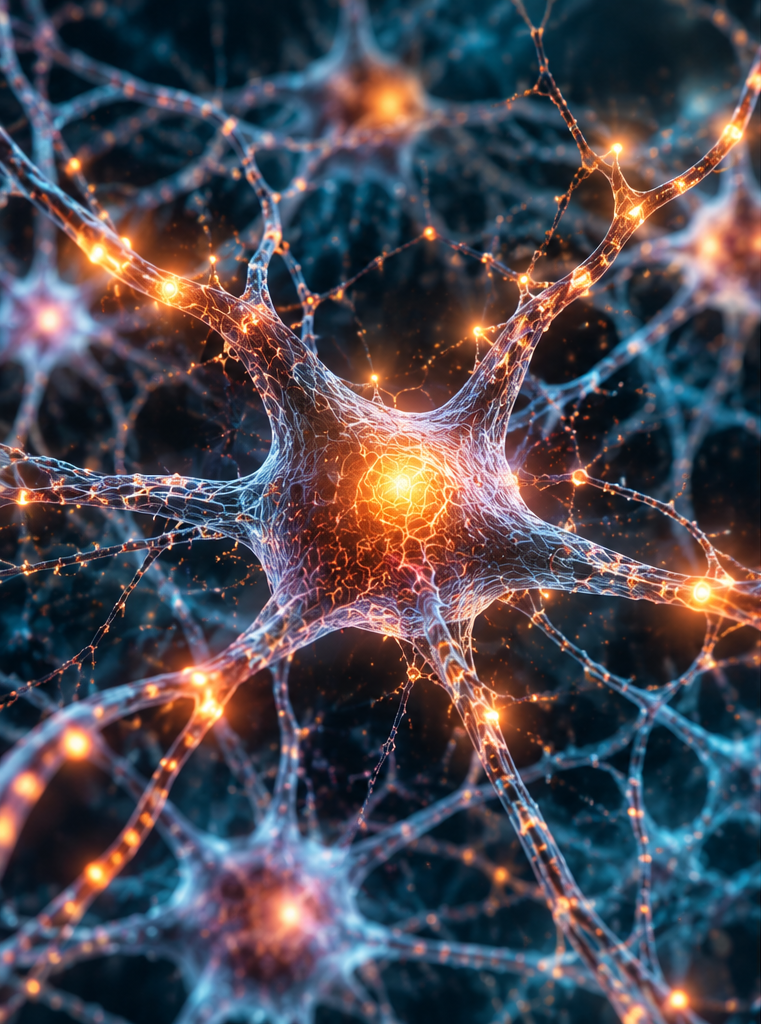
The hippocampus, the region responsible for memory, learning, and switching off the stress response, carries one of the densest concentrations of cortisol receptors in the brain. It is built to read cortisol. It is also the region most vulnerable to it.
Under sustained cortisol:
- Dendrites, the branches neurons use to communicate, retract.
- The production of new neurons in the hippocampus slows.
- BDNF, the protein that supports neuron growth and repair, declines.
- Neurons become more vulnerable to glutamate excitotoxicity, the same process already underway after concussion.
Prolonged stress hormone exposure does not simply strain brain cells. It removes their ability to survive the injury they are already managing. Neurons that would have recovered are pushed past the point of recovery.
And here is the loop. The hippocampus is one of the brakes on the HPA axis. When it is compromised, the brake weakens. Cortisol stays elevated. The hippocampus weakens further.
What you are feeling is the output, not the cause. Brain fog. Irritability. Broken sleep. Emotional reactivity. The inability to tolerate a crowded room. These are the signatures of a brain under sustained chemical load.
What Chronic Stress Actually Is
We tend to define chronic stress by time. Months of pressure. Years of overload.
Time is not the defining feature. Resolution is.
The stress response is fast. Cortisol begins rising within minutes of a stressor and typically peaks within 20 to 40 minutes. The largest and longest-lasting cortisol responses occur under two conditions: the situation feels uncontrollable, and it carries a social or evaluative threat.
That window matters. Within roughly 30 minutes, the system has already determined whether this is a demand it can move through or a threat it cannot escape. If the brain perceives an action to take, a way to adapt, respond, or complete the cycle, the response resolves. If it perceives none, the response stays on.
That is the beginning of chronic stress. Not the length of the problem. The absence of a perceived way through it.
Stress never leaves us. It is not supposed to. Stress is the signal that demand has arrived. What determines the outcome is not whether stress shows up. It is whether the system has the capacity to meet the demand and move through it.
Capacity Is Determined by Internal Resources
Capacity is not willpower. It is not mindset. It is not discipline.
Capacity is biological. It is the sum of the internal resources your brain and body have available at the moment demand arrives.
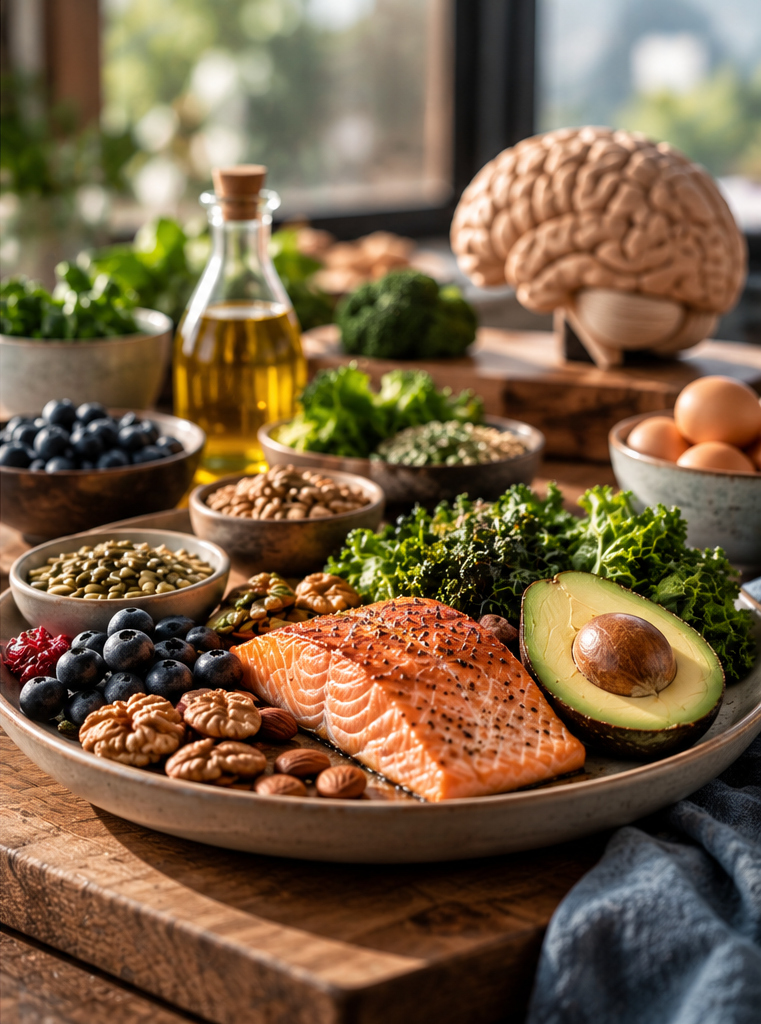
Those resources are, at their foundation, nutritional. The brain is roughly 2 percent of body weight and consumes about 20 percent of the body’s energy. Every neurotransmitter you rely on to stay calm, focused, and regulated is built from raw materials you supply, or fail to supply, from the inside out.
The core internal resources:
- Stable energy. The brain runs primarily on glucose. Blood sugar swings are read as threat and trigger cortisol release directly.
- Amino acids. Tryptophan becomes serotonin and melatonin. Tyrosine becomes dopamine and norepinephrine. Without adequate protein, the chemistry of focus and calm cannot be built.
- Omega-3 fatty acids. DHA is a structural component of neuronal membranes and helps regulate neuroinflammation.
- Magnesium. Guards the NMDA receptor, the gate through which glutamate excitotoxicity occurs. It is consumed rapidly under stress and drops after brain injury.
- B vitamins. Required for cellular energy production and neurotransmitter synthesis. Demand rises under sustained stress.
- Hydration. Even mild dehydration reduces attention, lowers mood, and increases the perceived effort of every task.
- Antioxidant capacity. A concussed brain generates oxidative stress. Without the resources to buffer it, damage accumulates.
The question I ask every client is simple. Are we feeding our brains?
Most people are not. They are running a high-demand system on depleted reserves and wondering why every strategy fails.
Resources vs. Strategies
This is where it changes.
Most stress advice is strategy. Work out. Move more. Sleep better. Connect. Meditate.
These strategies are valid. They are also expensive. Every strategy draws on resources. When the resources are not there, the strategy does not simply fail. It becomes one more demand the system cannot meet.
1. Working Out
Exercise is a controlled stressor. It raises cortisol acutely, depletes glycogen, and consumes magnesium and electrolytes. In a resourced system, it drives adaptation and raises BDNF. In a depleted, post-concussion system, intense training can extend symptoms and deepen fatigue.
Resource first: Adequate protein and carbohydrate around training. Electrolytes and magnesium. Intensity matched to current capacity, not former capacity.
2. Movement
Movement is not training. Low-load movement such as walking, mobility, and fascial work signals safety to the nervous system and restores circulation. Fascia is a sensory system. Restriction feeds the brain a continuous stream of threat input, and the brain responds accordingly.
Resource first: Hydration. Fascia is a fluid-dependent tissue. A dehydrated system moves stiffly and reports restriction.
3. Sleep
Sleep is when the brain clears metabolic waste and consolidates repair. Everyone tells you to sleep more. Few address why you cannot.
Waking at 2 or 3 a.m. is frequently a blood sugar event. Glucose drops. Cortisol and adrenaline rise to correct it. You are awake, wired, and exhausted at the same time.
Resource first: Stable blood sugar into the evening, adequate tryptophan, and magnesium. Melatonin is made from serotonin. Serotonin is made from tryptophan. No raw material, no sleep chemistry.
4. Connection
Social connection buffers the stress response. Oxytocin lowers cortisol reactivity. But connection requires capacity. A depleted brain reads social interaction as demand, which is why people living with persistent concussion symptoms withdraw from the very relationships that would help them recover.
Resource first: Restore the energy budget before expecting social tolerance. Connection returns when the system can afford it.
5. Meditation
Meditation strengthens prefrontal regulation over the stress response. It is also one of the most resource-intensive strategies there is. Sustained attention is metabolically costly. For a brain in an energy crisis, being told to sit still and focus is experienced as another task to fail.
Resource first: Fuel the brain before asking it to regulate itself. Use short, guided, body-based practice over long, effortful sessions.
The pattern is consistent. Strategies are the actions. Resources are the capacity to perform them. Remove the resources and every strategy becomes evidence that you are failing.
It is not that you are undisciplined. It is that your system is under-resourced.
The Brain Reset Program
Over 30 years and more than 30,000 individuals treated, including NFL, NHL, and Olympic athletes, the pattern I see is precise. People with persistent concussion symptoms do not lack effort. They lack the internal resources required to recover.
The Brain Reset Program is built on that principle. It is not coaching. It is a system recalibration process.
It begins with the FTI Brain Health Assessment, which identifies where the system is breaking down. From there, the program works on the brain, fascia, and nutrition connection directly: reducing neurological load, restoring internal resources, and rebuilding the capacity to meet demand. Every client receives a supplement review, because the raw materials determine what the brain can rebuild. The program is delivered online, so geography is no longer a barrier to recovery.
We measure the outcome. Symptoms. Clarity. Sleep. Execution. If it cannot be measured, it is not recovery.
The Bottom Line
Stress will always arrive. Demand will always rise. The question is not how to avoid stress. It is whether your system has what it needs to move through it.
Strategies tell you what to do. Resources determine whether you can.
When the system changes, everything changes.
Brain reset Program
- Consultations
- Programs
2 Assessments
Start here: Take the FTI Brain Health Assessment change link text to brain reset program
Selected References
- Giza CC, Hovda DA. The new neurometabolic cascade of concussion. Neurosurgery. 2014;75(Suppl 4):S24–S33.
- Dickerson SS, Kemeny ME. Acute stressors and cortisol responses: a theoretical integration and synthesis of laboratory research. Psychological Bulletin. 2004;130(3):355–391.
- Sapolsky RM. Glucocorticoids and hippocampal atrophy in neuropsychiatric disorders. Archives of General Psychiatry. 2000;57(10):925–935.
- McEwen BS. Physiology and neurobiology of stress and adaptation: central role of the brain. Physiological Reviews. 2007;87(3):873–904.
- Tanriverdi F, Schneider HJ, Aimaretti G, et al. Pituitary dysfunction after traumatic brain injury: a clinical and pathophysiological approach. Endocrine Reviews. 2015;36(3):305–342.
- Vink R. Magnesium in the CNS: recent advances and developments. Magnesium Research. 2016;29(3):95–101.