

Jingle Bells & Joint Glide
Why Smooth Sliding Surfaces Are the Secret to Pain-Free Motion
“Jingle bells, jingle bells, jingle all the way…”
The song is famous for the image of a sleigh gliding effortlessly across snow.
That smooth, soft, frictionless motion?
That’s exactly how your joints are supposed to move.
But for many people, the body feels more like:
- grinding gears
- sticky movement
- painful rotation
- crunchy knees
- tight shoulders
- stiff hips
The reason?
Poor fascial glide.
Not “old age.”
Not “tight muscles.”
Not “degenerative joints.”
Glide.
Let’s explore the science behind this essential fascial function, and why “dashing through the snow” is the metaphor your joints didn’t know they needed.

Glide: The Forgotten Element of Human Movement
Most people focus on:
- strengthening
- stretching
- joint alignment
But fascia has one job that makes all of these possible:
Allow layers to glide across each other.
This sliding surface is created by:
- water
- hyaluronic acid
- fascial planes
- collagen fibers
- elastin
- extracellular matrix
When glide is working:
✔ movement feels smooth
✔ joints are quiet
✔ friction is minimal
✔ tissues communicate clearly
✔ effort decreases
✔ pain reduces
When glide is NOT working:
❌ tissue catches
❌ movement feels sticky
❌ pressure builds
❌ inflammation increases
❌ tension escalates
❌ pain appears
Just like a sleigh on dry pavement — everything feels wrong.
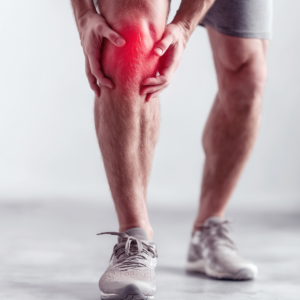
Why Joints Make Noise (and Why They Shouldn’t)
Healthy movement is nearly silent.
Think about the sleigh in “Jingle Bells”:
- no creaking
- no crunching
- no grinding
It’s the perfect analogy for joint health.
When fascia is hydrated and elastic:
✔ knees track well
✔ shoulders rotate freely
✔ hips swing
✔ ankles articulate smoothly
✔ spine glides segment to segment
But when fascia thickens or dries:
- crack
- pop
- grind
- snap
This is not “just aging.”
It’s a glide problem.
A restore-able problem.
Why Glide Reduces Pain (Instantly)
Pain often comes from compression + friction between layers.
Glide is the antidote.
When fascial layers slide:
- nerves calm
- inflammation decreases
- load redistributes
- joints decompress
- movement becomes efficient
- protective bracing turns off
This is why people often feel:
- lighter
- warmer
- more stable
- instantly more mobile
…after fascial work.
It’s not magic.
It’s physics.
When layers glide, force distributes instead of localizing.
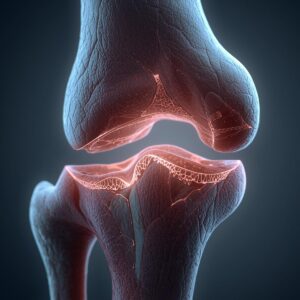
Jingle Bells – Movement Loves Rhythm
Rhythm is the unsung hero of both sleigh travel and fascial glide.
Rhythmic oscillation:
✔ hydrates tissue
✔ reduces threat
✔ reorganizes collagen
✔ stimulates lymphatic flow
✔ lubricates fascial planes
Every time the reindeer bounce in rhythm, they’re doing the equivalent of:
- fascial pumping
- oscillatory mobilization
- joint decompression
- fluid movement
Humans thrive on the same rhythms.
Walking.
Swaying.
Bouncing.
Rocking.
Breath-led stretching.
Rhythm restores glide.

What Reduces Glide?
Here’s the “Grinch list” for fascial glide:
❌ Dehydration
Hyaluronic acid thickens → friction increases.
❌ Prolonged sitting
Compression dries tissue.
❌ Stress
Threat stiffens layers.
❌ Inflammation
ECM thickens, reducing slide.
❌ Overstretching
Forces tissue into protective density.
❌ Injury
Creates adhesions.
Most people diagnose the symptom (“my hip is tight”)
instead of the cause (“my fascia isn’t sliding”).
Holiday Glide Tips: How to Move Better Today
✔ Drink water + move water
Hydration only helps fascia if you move.
✔ Use oscillatory movement
Side-to-side, gentle bouncing, rocking.
✔ Avoid end-range forcing
Glide comes from subtlety, not aggression.
✔ Use breath-based mobility
The diaphragm pumps fluid between layers.
✔ Warm up slowly
Heat increases elasticity and lubrication.
✔ Add self-compression
Gentle pressure stimulates glide restoration.
Tools to Improve Glide Right Away
These 10 gentle patterns restore glide with zero force.
Shows how glide, hydration, and neural inputs work together.
Explains why mental overload decreases glide through tension.
Master glide restoration in clinical settings.