

The System Nobody Is Training: Why Fascia Is the Missing Layer in Elite Athletic Preparation
Fascia training for athletes is one of the most underdeveloped areas in elite sport science — and the cost of that underdevelopment is being paid in injury rooms and intensive care units this week.
Early in my career I consulted on an elite conditioning programme. Sophisticated equipment. Well-qualified staff. Current programming methods. The strength work was excellent. The movement protocols were evidence-based. Six weeks in, three soft tissue injuries. The athletes had never been tighter. The fascia had never been touched.
That programme — and those three athletes — became the clinical question that built the Fascia Training Institute. Not: why are these athletes getting injured? But: what is the system most directly responsible for force distribution, proprioception, and structural protection that this entire facility is not training?
The answer was the fascial system. Fifteen years on, the answer is still the same.
| Walk into any elite sport facility in the world and you will find programming for muscle, cardiovascular capacity, and neuromuscular coordination. You will almost certainly not find a programme for fascia. |

What the Fascial System Actually Is
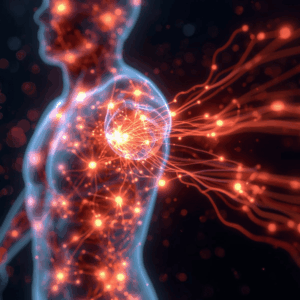
Fascia is a continuous, three-dimensional matrix of collagen, elastin, and ground substance that surrounds, connects, and communicates between every muscle, bone, nerve, blood vessel, and organ in the body — including the brain. It is not passive packaging. It is the body’s primary sensory and mechanical communication system.
Fascia contains a higher density of sensory nerve endings than muscle tissue. It is the substrate through which proprioception — the body’s sense of its own position, movement, and force — is primarily organised. It transmits mechanical force between body segments across myofascial chains that span the entire kinetic chain. It responds directly to nervous system state — contracting under sympathetic activation, releasing under parasympathetic. And it forms the mechanical envelope that suspends and protects the brain within the cranium.
This last function is not a peripheral consideration for contact sport athletes. It is a primary one. The integrity of the fascial system surrounding the brain directly influences how impact energy reaches the cranium in every collision, fall, and contact event. An athlete with well-conditioned, hydrated, mechanically responsive fascial tissue does not receive that impact the same way as one whose connective tissue is rigid, restricted, or dehydrated. The physics are different. The neurological risk is different.
The Five Functions That Determine Athletic Outcome
Force transmission through myofascial chains determines both performance output and injury risk. A sprinter’s power does not travel in a straight line from quadricep to ground — it spirals through fascial connections spanning the entire kinetic chain. A rugby player’s tackle force does not stop at the shoulder — it distributes or fails to distribute through the fascial network in ways that determine whether the impact causes injury or is absorbed safely. The efficiency of force transmission is a training variable, and it is not being trained.
Proprioceptive precision depends on the mechanoreceptors embedded in fascial layers. These receptors provide the nervous system with continuous positional data at a resolution that muscle spindles alone cannot match. When fascial tissue is restricted or dehydrated, proprioceptive signalling degrades. The athlete loses the millimetre-level movement precision that separates elite performance from good performance — without knowing why their movement quality has declined.
Brain protection through the meningeal and cervical fascial system is the function with the most direct implications for concussion prevention. The fascial envelope around the central nervous system functions as a force-absorbing and force-distributing buffer. When this system is optimally conditioned, force transmitted to the head in a collision is distributed through the fascial network before it reaches the brain. When it is undertrained, that distribution fails and the neurological structures absorb forces they were not designed to absorb alone.
Elastic energy storage is what separates explosive athletes from powerful ones. Fascial tissue, when properly trained, stores and releases mechanical energy like a biological spring — enabling the reactive, elastic movement quality that defines high performance across all athletic disciplines. This function depends entirely on fascial hydration, elasticity, and collagen architecture. All of these are trainable. None of them improve with standard resistance training alone.
Tissue layer sliding — the fascial system’s capacity to allow muscles to move independently of bones, nerves to glide through surrounding tissue, and organs to shift during respiration — is the function that prevents the chronic restriction patterns that bring athletes into treatment rooms. When fascial adhesions develop from undertraining, dehydration, or sustained stress responses, this sliding is compromised. The result is the chronic tightness that returns within 48 hours of treatment, the recurring restriction in the same areas, and the movement limitations that no amount of stretching resolves because the neurological signal driving the restriction has not been addressed.
What Undertrained Fascia Costs
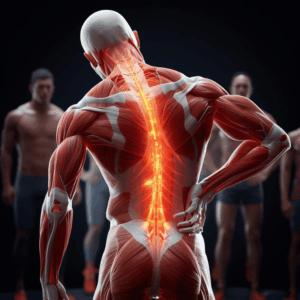
Fascial tissue responds to loading and movement in ways that are distinct from muscle tissue. Where muscle hypertrophies and strengthens with progressive overload, fascia remodels more slowly — requiring consistent, varied movement stimuli across multiple planes and loading speeds to maintain its viscoelastic properties. Without appropriate stimulation, fascial tissue progressively loses hydration, increases in density, and develops adhesions between layers that restrict sliding and compromise every function listed above.
In practice, undertrained fascia presents as: chronic tightness in athletes who stretch daily; recurring soft tissue injuries in athletes who are objectively strong and well-conditioned; movement restrictions that emerge in late-season fatigue when the fascial system’s reserves are depleted; reduced explosive performance despite maintained strength metrics; and elevated brain injury risk in contact athletes whose connective tissue architecture cannot distribute impact loads efficiently.
The third category — elevated brain injury risk — is the one that the sports safety conversation needs to integrate immediately. The fascial system is not peripheral to concussion prevention. It is one of the primary biological mechanisms available to protect the brain before impact occurs.
The FTI Training Framework
At the Fascia Training Institute, fascial training is built on five evidence-based principles that distinguish it from standard flexibility or mobility work. Hydration is primary and non-negotiable — fascial tissue is predominantly water, and its viscoelastic properties depend directly on cellular hydration. An athlete who presents in a state of chronic low-grade dehydration presents a biomechanically compromised fascial system regardless of their training quality.
Load variability across multiple planes, speeds, and amplitudes exposes the fascial network to the full range of mechanical stimuli required for adaptive remodelling. Standard linear resistance training does not provide this. Movement complexity — the inclusion of rotational, diagonal, and multiplanar patterns in training design — is required to stimulate the three-dimensional fascial network comprehensively.
Elastic loading through slow-stretch-fast-release sequences stimulates the collagen remodelling and spring-like energy storage that distinguish fascially trained athletes from those who are simply strong. Recovery modalities that support tissue temperature, hydration, and lymphatic drainage are not optional additions to training — they are the biological processes through which fascial adaptation occurs overnight.
The athlete who trains their fascial system moves more efficiently, recovers faster, sustains fewer soft tissue injuries, and presents a neurologically better-protected body to the forces of contact sport competition. The most advanced performance programmes in the world will integrate fascial training as a primary preparation modality within this decade. The institutions that begin now will not simply have a performance advantage. They will have a safety advantage — and the science now supports both claims with equal clarity.
| Take the free quiz: Is Your Athlete’s Brain Truly Recovered? Download the free Neurofascial Release Guide — Simone Fortier · Founder, Fascia Training Institute™ |