Why Your Athlete Cannot Sleep After a Concussion — And Why the Answer Is Not in Their Pillow
Post-concussion sleep disruption is one of the most common and most systematically mismanaged presentations in sports medicine — and the reason it persists is rarely about sleep itself.
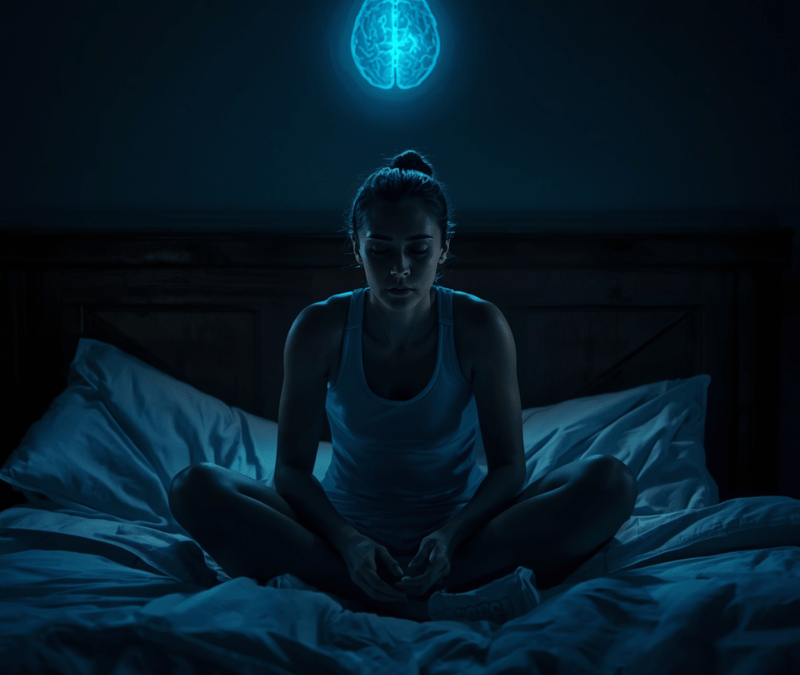
An athlete came to me sleeping nine hours a night and waking more exhausted than when she went to bed. She had been cleared from concussion four months earlier. Her coaching staff had begun to question whether the fatigue was psychological. Her cortisol at 7am was half its normal level. At 11pm it was still significantly elevated. Her HPA axis had never been assessed. Not once. Not during the acute phase. Not during recovery. Not at clearance.
The standard response to her sleep disruption had been sleep hygiene advice, blue light restriction, and melatonin supplementation. These produced temporary improvement and sustained frustration. They did not address the cortisol rhythm that was preventing her from achieving the deep sleep stages where neurological repair is most active. They could not, because nobody had measured it.
| Telling a post-concussion athlete to sleep better without addressing the cortisol rhythm governing their sleep is equivalent to telling a dehydrated athlete to perform better without giving them water. The biology is the baseline. |
The Architecture of Healthy Sleep in Athletes
In a physiologically healthy athlete, cortisol follows a precise circadian arc that directly governs sleep architecture. The Cortisol Awakening Response — the sharp spike in cortisol within 30 to 45 minutes of waking — drives energy mobilisation, immune activation, and cognitive readiness at the start of the biological day. Cortisol then declines progressively through the morning into a midday plateau, drops through the afternoon, and reaches its lowest point during the first hours of deep sleep. This nadir is when growth hormone secretion peaks and the most metabolically active tissue repair of the entire 24-hour cycle occurs.
This circadian arc is not simply a hormonal pattern. It is the biological clock that regulates when the body is physiologically ready to perform, when it is ready to recover, and when it is prepared to adapt. Athletes who train at high intensity without understanding this arc — scheduling loading phases during cortisol nadir periods, or competing under chronic HPA elevation — are training against their own biology. Post-concussion athletes whose arc has been disrupted by neurological injury are attempting to recover without the hormonal infrastructure that recovery requires.
How Concussion Breaks the Arc at Both Ends
Concussion disrupts the cortisol circadian arc at both ends simultaneously, through mechanisms that are now well-documented in the clinical literature. The morning Cortisol Awakening Response is blunted — the sharp spike that should ignite the biological day fails to reach its normal amplitude. Athletes describe this with consistent language: waking without energy despite adequate hours in bed, requiring multiple coffees to achieve baseline cognitive function, feeling mentally slow for several hours after rising. This is not sleep inertia. It is a disrupted HPA axis failing to execute the morning activation sequence.
Simultaneously, the evening cortisol decline fails. Neuroinflammation, disrupted HPA feedback loop function, and the psychological stress accompanying injury, pain, and competitive absence all sustain cortisol at levels that should be absent during the sleep window. The result is a nervous system that remains in low-grade activation during the hours when it most needs to be at rest. Slow-wave sleep — the stage during which glymphatic clearance of metabolic waste occurs, synaptic consolidation takes place, and the neurological repair that brain injury demands is most active — becomes compressed or inaccessible.
The athlete sleeps. They do not recover. And the clinical assessment that records sleep hours but not sleep architecture, that measures symptom burden but not cortisol rhythm, misses the distinction entirely.
The Research That Makes This Clinically Urgent
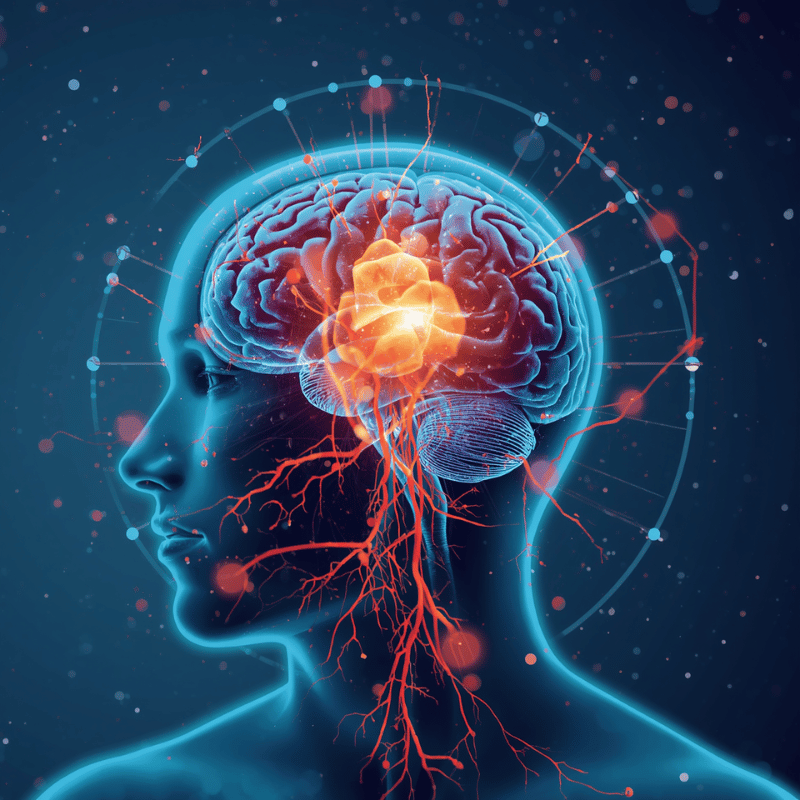
Research published in the Journal of Head Trauma Rehabilitation in 2024 established that athletes with disrupted sleep following concussion took twice as long to recover compared to those with intact sleep architecture. This is one of the most clinically significant findings in contemporary concussion science — and its significance is not fully captured by treating sleep in isolation.
The doubled recovery timeline is a cortisol rhythm problem manifesting as a sleep measurement. Research from Frontiers in Cellular Neuroscience demonstrates that post-TBI sleep fragmentation extended over 30 days produced measurable hippocampal dysfunction and deficits in memory acquisition, associated with increased stress-related gene expression and suppressed glucocorticoid receptor signalling. The biology is explicit: when the cortisol arc is disrupted after concussion, the sleep disruption that follows actively impairs neurological recovery — and treating the symptom without treating the system produces limited and temporary results.
The Brain-Fascia Dimension
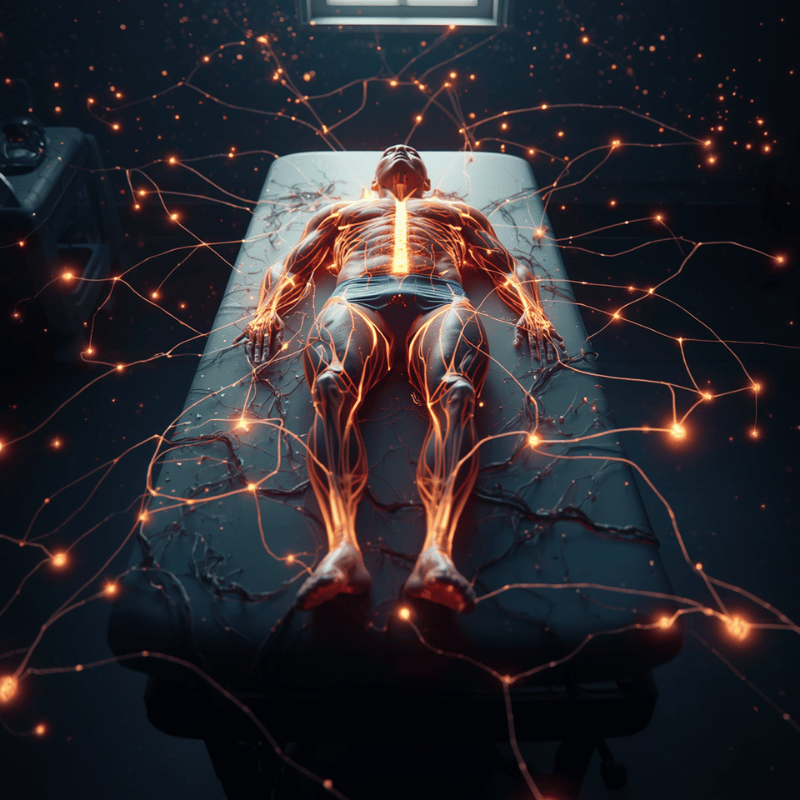
At the Fascia Training Institute, sleep disruption in post-concussion athletes is understood within the Brain-Fascia System framework. Chronic cortisol elevation — the same mechanism disrupting sleep — directly impairs fascial tissue remodelling. Fibroblast activity, hyaluronic acid production, and collagen turnover all depend on the hormonal environment that the cortisol rhythm creates. When that rhythm is disrupted, the overnight biological processes that maintain fascial health are compromised simultaneously with the neurological repair processes. The athlete who cannot achieve deep sleep is not only neurologically under-recovering. Their connective tissue is under-recovering in parallel.
This is why athletes with post-concussion sleep disruption present with the combination of neurological symptoms, fascial restriction, emotional dysregulation, and physical stiffness that standard protocols address individually and incompletely. They are all expressions of the same underlying hormonal disruption — and they all improve when the HPA axis is treated as the primary variable rather than the last resort.
A More Precise Clinical Approach
Addressing sleep in post-concussion athletes requires measuring the cortisol rhythm that governs it. Salivary cortisol testing at four points across the day provides the data needed to identify whether the Cortisol Awakening Response is intact, whether the evening decline is occurring, and where in the circadian arc the HPA axis has lost its architecture. This is not a specialist investigation requiring expensive equipment. It is a salivary sample protocol that any informed practitioner can implement.
Interventions then follow the data: morning cortisol support protocols for blunted awakening response, evening cortisol reduction strategies for the failed nadir, HPA axis regulation through specific nutritional, movement, and recovery modalities that address the neurochemical environment rather than the sleep symptom itself. Practitioners trained through the Fascia Training Institute learn to integrate this assessment as a standard component of post-concussion evaluation — not as an alternative to standard protocols, but as the biological layer those protocols have been missing.
The athlete who sleeps nine hours and wakes exhausted is not lazy, not psychological, and not beyond help. They are biologically disrupted in a specific, measurable, and treatable way. The science has known this for years. The clinical standard has not yet caught up. The Brain Recovery Series is our contribution to closing that gap.
| Take the free quiz: Is Your Athlete’s Brain Truly Recovered? Download the free Neurofascial Release Guide — Simone Fortier · Founder, Fascia Training Institute™ |