
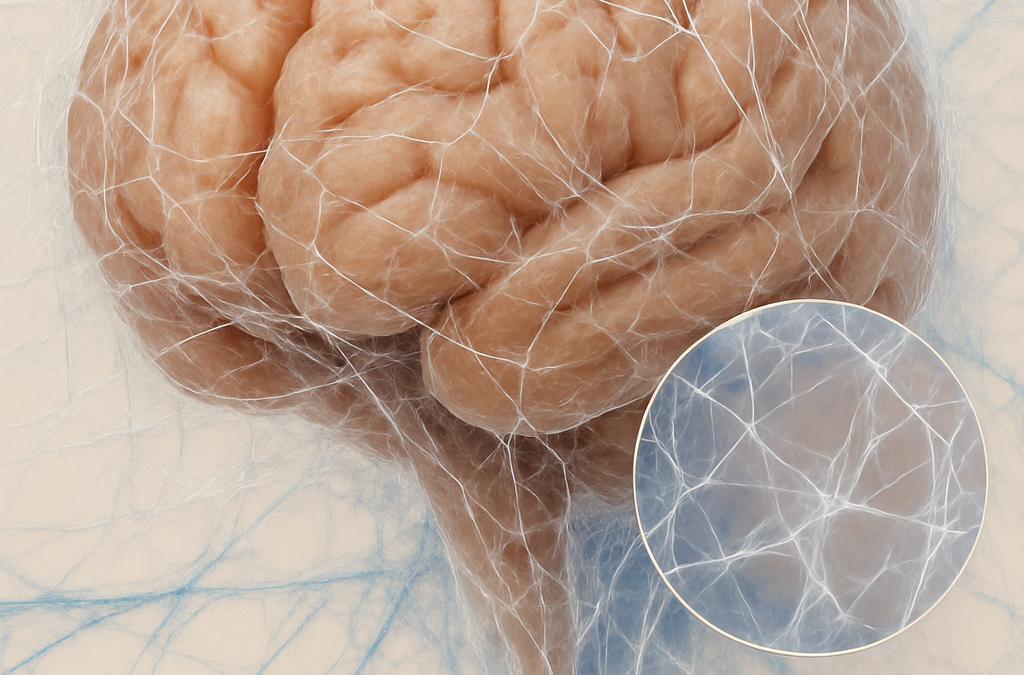
How Altered Cranial Biomechanics Prevent Recovery From Concussion (mTBI)
Why Some Concussions Don’t Heal, Even When the MRI Is “Normal”
Millions of people suffer lingering concussion symptoms long after the brain should have recovered.
They’re told:
- “Rest more.”
- “It’s anxiety.”
- “Everything looks normal.”
But the symptoms persist:
headaches
brain fog
dizziness
speech problems
overwhelm
sensitivity to light and sound
emotional dysregulation
Not because of damage inside the brain,
but because of what is happening around the brain.
This is the missing link:
Concussion recovery is often blocked by altered cranial biomechanics — changes in how the skull, fascia, and dura move after trauma.
These biomechanical restrictions physically change how the brain moves, breathes, and communicates.
This is the part almost no practitioner is assessing.

What Are Cranial Biomechanics?
Cranial biomechanics refer to:
✔ how the skull bones subtly shift
✔ how the dura and cranial fascia expand + contract
✔ how the brain “glides” within the cranium
✔ how CSF circulates
✔ how mechanical forces travel through the fascia–dura–brain continuum
The cranium is not fixed.
It is a dynamic, fluid-mechanical system where movement = healing.
Every heartbeat creates motion.
Every breath expands and contracts the cranial vault.
Every step sends oscillations into the dura.
This mechanical motion is crucial for:
- CSF flow
- glymphatic clearing
- blood perfusion
- neural conduction
- cranial nerve function
- intracranial pressure regulation
When fascia is healthy and hydrated, the cranium behaves like a fluid-filled, elastic biotensegrity system.
When it’s injured… everything changes.
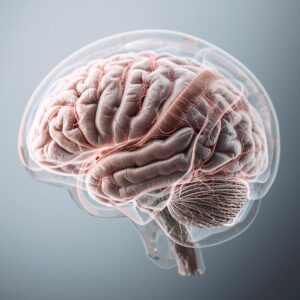
How Concussion Alters Cranial Biomechanics
Even a “mild” traumatic brain injury applies force not only to the brain, but to the entire fascial-dural system.
Research shows:
✔ Fascia transmits force rapidly and globally (Huijing, 2007; Schleip, 2012).
✔ The dura mater is directly connected to cranial fascia, sutures, and cervical fascia (Hack et al., 1995; Scarr, 2011).
✔ Trauma densifies fascia, reducing elasticity and hydration (Stecco et al., 2011).
✔ Force to the cranium alters dural tension and intracranial pressure gradients (Zumpano et al., 2006; Greitz, 2010).
✔ Restricted dura impairs neural signaling and CSF flow (Bálint et al., 2019).
After a concussion, the fascia surrounding the cranium often becomes:
- sticky
- less hydrated
- thicker
- mechanically resistant
- asymmetrically tense
This results in altered cranial biomechanics.
Why This Prevents the Brain From Healing
- Restricted Dura = Restricted Brain Motion
The dura is fascia.
It’s a tension-bearing membrane that anchors the brain to the skull.
After concussion, tension patterns form that:
- inhibit normal brain oscillation
- reduce shock absorption
- create “drag” on neural tissue
- distort the brain’s resting position
MRI motion studies show that the brain MUST move to regulate pressure and CSF (Greitz, 2010).
When it cannot move → symptoms persist.
- Impaired CSF Flow
Densified cranial fascia compresses the dura and alters CSF movement.
Research confirms:
- Restricted cranial mobility reduces CSF circulation (Bálint, 2019).
- CSF stagnation increases inflammation and slows healing.
Without proper CSF movement, the brain cannot:
- clear metabolic waste
- regulate pressure
- deliver nutrients
- remove inflammatory byproducts
Healing slows dramatically.
- Mechanical Load on Brain Tissue (“Neural Drag”)
This is what YOU discovered clinically — now supported by multiple anatomical studies.
Tension in cranial fascia and dura creates tensional drag on:
- the prefrontal cortex (focus, clarity)
- temporal lobes (speech processing)
- brainstem (autonomics)
- cerebellum (balance + coordination)
- limbic system (emotional regulation)
Pontell (2013) and Hack (1995) verified that muscle + fascia tension is directly transmitted to the dura and brainstem — altering neural firing.
This is why clients say:
“My thoughts are clear, but I can’t get the words out.”
“I feel pressure in my head.”
“I still feel off.”
The brain is not free to function.
- Cranial Nerve Compression
Fascial tension affects cranial nerves IX–XII, along with the vagus nerve.
This impacts:
- speech
- swallowing
- vocalization
- heart rate
- regulation
- stress response
Kumka & Bonar (2012) proved that fascial restrictions influence these nerves mechanically.
When the nerves cannot glide, symptoms persist.
- Altered Biomechanics = Altered Brain Physiology
Biomechanical changes create physiological consequences:
- altered blood flow
- altered oxygenation
- altered glucose use
- altered electrical patterns
- altered autonomic balance
THIS is why concussion doesn’t resolve.
You cannot heal the brain if the mechanical environment around the brain is still injured.
Why Traditional Concussion Rehab Fails
Most concussion rehab focuses on:
- vestibular training
- vision therapy
- cognitive exercises
- balance exercises
- rest
These approaches are useful… BUT incomplete.
None address the structural and fascial mechanics that prevent the brain from recovering.
If the dura is still tight —
If the cranial fascia is still compressed —
If the brain cannot move —
You can rehab forever and still not get better.
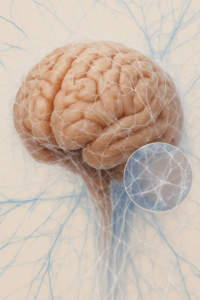
Why Releasing Cranial Fascia Accelerates Recovery
Restoring cranial biomechanics can produce rapid improvements because it:
✔ restores brain motion
✔ normalizes dural tension
✔ reopens CSF pathways
✔ reduces mechanical load on neural tissue
✔ decompresses cranial nerves
✔ resets autonomic imbalance
✔ improves oxygenation & perfusion
✔ improves speech & processing speed
This is why Dynamic Brain Healing™ produces immediate changes where other methods stall.
It doesn’t just treat the BRAIN.
It treats the fascial system the brain lives inside.
Citations
Huijing PA. Myofascial force transmission. J Electromyogr Kinesiol. 2007.
Schleip R. Fascial mechanoreceptors and contractility. J Bodyw Mov Ther. 2012.
Stecco A, et al. Fascial densification after trauma. Surg Radiol Anat. 2011.
Hack GD, et al. Dural connection of suboccipital muscles. Spine. 1995.
Pontell ME, et al. Myodural bridge review. Clin Anat. 2013.
Zumpano MP, et al. Mechanical tension of dura affecting trigeminal system. Clin Anat. 2006.
Greitz D. Mechanical forces in CSF flow. Neuroradiology. 2010.
Bálint K, et al. Cranial fascia and CSF dynamics. Neurosurg Rev. 2019.
Kumka M, Bonar J. Fascial continuity with cranial nerves. Int J Morphol. 2012.
Fernández-de-Las-Peñas C, et al. Trauma-induced cranial fascial tension. Pain Med. 2014.
Haldeman S, Rubenstein S. Whiplash & cranial dural strain. Spine. 1992.