Stretch or Train Fascia: Fact, Fiction, and the Missing Principle of Space
The Posture Shift No One Is Talking About
A decade ago, postural collapse was associated with aging. Today, it is being observed in children.
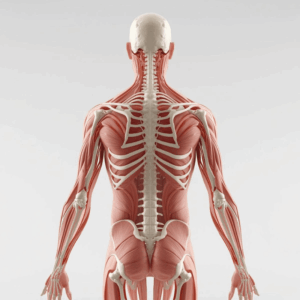
Eight-year-olds are presenting with the spinal patterns, breathing restrictions, and tension profiles once seen in individuals decades older. The cause is not subtle. It is behavioral repetition—hours spent in forward-flexed positions, most commonly over smartphones and screens.
But posture is only the surface expression.
The deeper issue is what this repetition does to the fascial system.
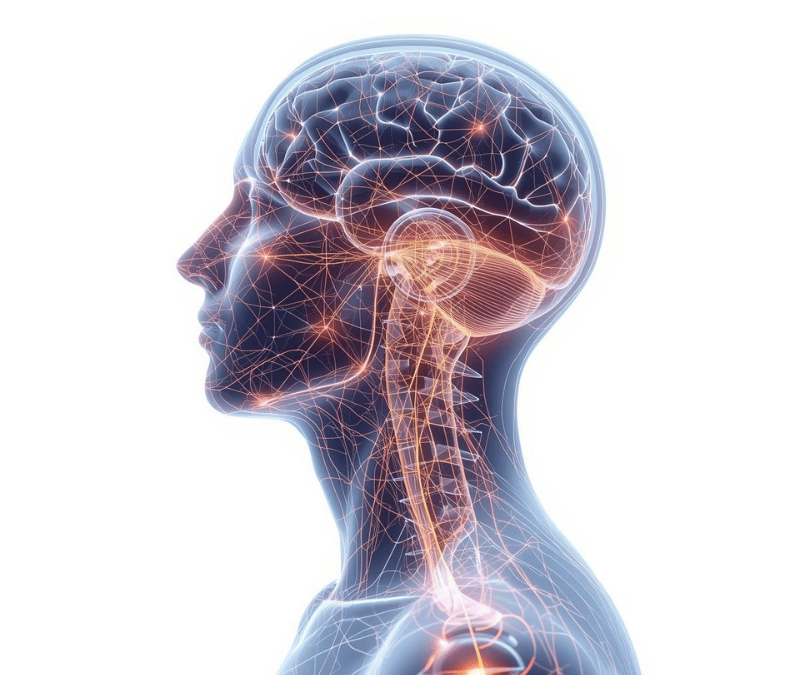
At the Fascia Training Institute, fascia is not viewed as passive connective tissue. It is understood as a dynamic, responsive system that shapes internal space, regulates force distribution, and directly influences physiology.
The question is not simply whether fascia can stretch.
The real question is:
What happens to the body when fascia loses its ability to create space?
Fascia Is Not Just Being Stretched—It Is Being Programmed
Fascia adapts to what you do most.
- Hold a position long enough, and it becomes your baseline
- Repeat a movement pattern, and it becomes your structure
- Maintain compression, and it becomes your internal environment
This is why posture is no longer just a musculoskeletal issue. It is a system-wide adaptation.
Children model what they see. Adults reinforce it through behavior. Over time, the body organizes around:
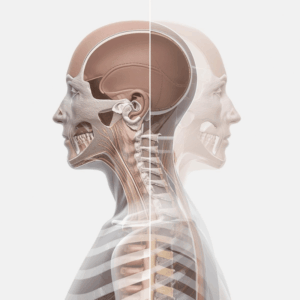
- Forward head posture
- Collapsed ribcage
- Restricted diaphragm movement
- Altered spinal mechanics
This is not simply “tightness.”
It is fascial reorganization under chronic load.
The Hidden Cost of Compression
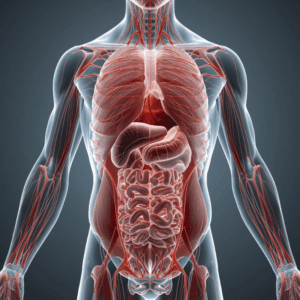
When the body is held in a forward, compressed position:
- The ribcage loses expansion capacity
- The diaphragm cannot move efficiently
- Swallowing and digestion are mechanically altered
- Circulation and fluid dynamics are compromised
Internally, space is reduced.
And when space is reduced:
- Cells operate in a less optimal environment
- Neural signaling efficiency declines
- The nervous system shifts toward stress states
- Fatigue increases
This is why individuals report:
- Low energy
- Brain fog
- Anxiety
- A sense of heaviness in the body
These are not isolated symptoms. They are expressions of altered internal mechanics.
Can Fascia Be Stretched?
Yes—but not in the way it is commonly taught.
Fascia does have elastic properties, primarily due to elastin fibers. These allow for:
- Micro-level deformation
- Directional adaptability
- Temporary length changes under load
However, fascia is not a simple elastic band.
It is a highly organized, tension-based system that responds to:
- Load
- Repetition
- Hydration
- Neurological input
Traditional stretching creates temporary changes in length.
But it does not necessarily restore:
- Structural balance
- Fluid dynamics
- Neurological regulation
Can Fascia Be Trained?
Yes—but again, not in the conventional sense.
Fascia is constantly being trained through:
- Movement patterns
- Postural habits
- Breathing mechanics
- Emotional and neurological states
If movement is limited, fascia adapts to limitation.
If movement is varied and expansive, fascia adapts to mobility and resilience.
The issue is not whether fascia can be trained.
The issue is:
What are you training it to become?
The Missing Principle: Space
The industry often frames the conversation as:
- Stretching fascia
- Strengthening fascia
- Training fascia
But this misses the most important function of fascia:
Fascia creates and maintains space within the body.
This space is required for:
- Movement
- Circulation
- Neural signaling
- Fluid exchange
When fascia becomes restricted, it does not just limit motion.
It reduces internal space, altering how every system functions.
From Stretching to Spacing: A Shift in Understanding
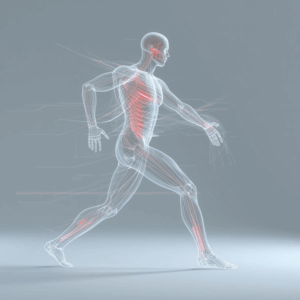
At the Fascia Training Institute, the focus is not on “stretching” fascia.
It is on restoring space within the system.
Dynamic Brain Healing™ and Neuro Fascia Release – fascia-based techniques are designed to:
- Reduce excessive tension patterns
- Restore mobility across fascial lines
- Improve structural organization
- Re-establish efficient internal space
This shift—from stretching to spacing—changes outcomes.
Because when space is restored:
- Movement improves
- Breathing normalizes
- Circulation increases
- The nervous system stabilizes
Why This Matters More Than Ever
The current environment is shaping fascia in ways never seen before:
- Prolonged screen use
- Reduced movement variability
- Chronic low-level stress
- Environmental and sensory overload
The result is a population experiencing:
- Accelerated postural decline
- Chronic pain
- Reduced performance capacity
- Increased fatigue and anxiety
This is not simply a lifestyle issue.
It is a structural and physiological adaptation occurring at scale.
A Systems-Based Perspective
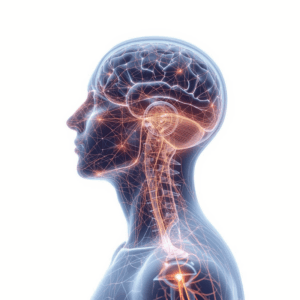
Fascia cannot be understood in isolation.
It is integrated with:
- The nervous system
- The circulatory system
- The lymphatic system
- The mechanical structure of the body
Any intervention that ignores this integration will produce limited results.
Dynamic Brain Healing™ approaches fascia as part of a complete system, addressing:
- Mechanical restriction
- Neurological regulation
- Fluid dynamics
The Key Principle
Fascia does not simply need to be stretched.
It needs to be organized, responsive, and capable of creating space.
Because:
Where there is space, systems can function.
Where systems function, performance and health improve.
Conclusion
The question is not whether fascia can be stretched or trained.
The question is whether the current approach is addressing what matters most.
Fascia is constantly adapting.
The body is constantly reorganizing.
The real opportunity lies in shifting the focus from length to space, from isolated techniques to system-level restoration.
Restore Space. Rebuild Function. Lead the Next Standard of Care.
If you are a practitioner seeing recurring pain, postural collapse, or performance plateaus, the issue is not lack of treatment—it is lack of system-level resolution.
Dynamic Brain Healing™ and Fascia Training Institute certifications teach you how to:
- Reduce mechanical compression across the system
- Restore fascial space and force distribution
- Improve neurological and fluid dynamics outcomes
Explore Practitioner Certifications and Course Pathways:
https://www.fasciatraininginstitute.com/practitioners/