Why Persistent Post-Concussion Symptoms Don’t Resolve With Standard Care
A patient completes the standard four-to-six-week concussion recovery window. The headaches remain. The light sensitivity remains. The word-finding lag remains. The chart says “resolved.” The patient does not experience resolved.
This is not rare. Systematic review data places the rate of persistent post-concussion symptoms at roughly 10% to 30% of mTBI cases, depending on the population and definition used (Cancelliere et al., 2023). The direct answer to why standard care stalls here is straightforward: most initial concussion protocols are built to manage the acute injury, not to investigate why a subset of patients continue to generate symptoms once the expected biological recovery window has closed.
Why Conventional Reasoning Stalls
Standard concussion management — relative rest for 24 to 48 hours, graded return to activity, symptom-based reassessment — is well supported for the majority of cases (Patricios et al., 2023). Where it stalls is with the subset of patients whose symptoms persist. The default clinical instinct is to treat the symptom at its reported location: headache gets headache management, dizziness gets vestibular referral, cognitive fog gets neuropsychological workup. Each referral is reasonable. None of them, in isolation, addresses a structural or mechanical contributor that a symptom-location-only framework will not detect.
Persistent symptoms are outputs of an unresolved input. Treating the output without identifying the input produces a familiar clinical result: temporary relief, incomplete resolution, or symptom migration to a new “location” three months later.
What the Evidence Establishes
Current concussion guidelines have already moved in this direction. The Amsterdam Consensus Statement on Concussion in Sport (Patricios et al., 2023) and the Ontario Neurotrauma Foundation’s Living Concussion Guidelines both identify cervical, vestibular, and ocular-motor dysfunction as domains requiring specific assessment in patients whose symptoms extend past the expected window — not as an alternative diagnosis, but as a frequently under-assessed contributor sitting alongside the primary injury. The American Congress of Rehabilitation Medicine’s 2023 diagnostic criteria for mTBI similarly emphasize a detailed mechanism-of-injury history involving the head and neck, not a symptom checklist alone (Silverberg, Iverson, et al., 2023).
None of this literature specifies fascia as the mechanism. It does establish, at a guideline level, that the cervical spine and cranial region are recognized, under-assessed contributors to prolonged post-concussion presentations — which is the clinical territory Dynamic Brain Healing™ was built to address.
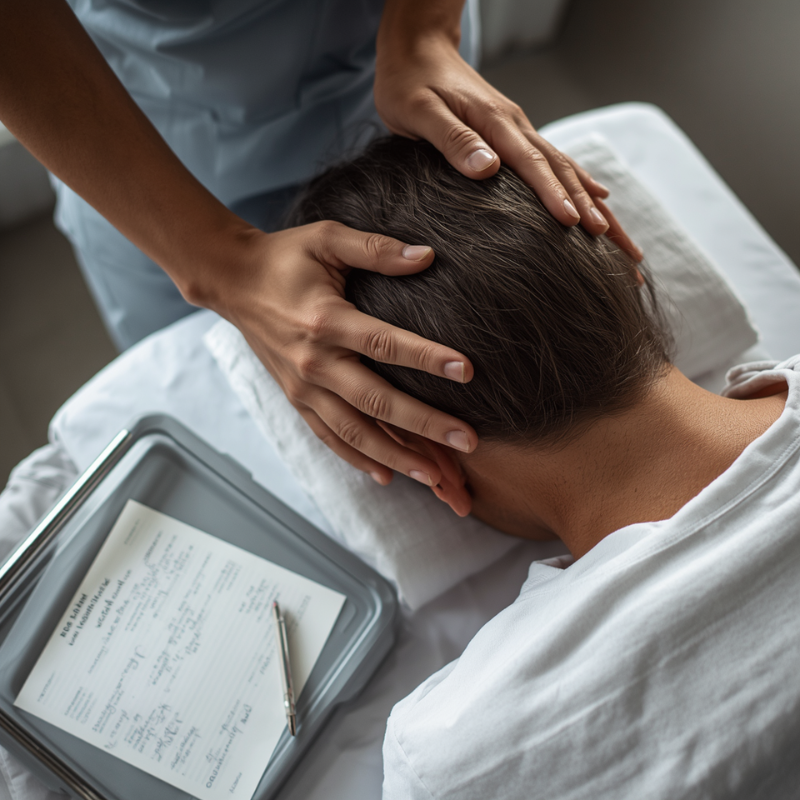
A symptom’s location and its cause are not always the same place. Assessment has to look past where it hurts.
What a Skilled Practitioner Needs to Assess
A practitioner working with a persistent post-concussion case needs more than a symptom inventory. At minimum: a mechanism-specific history — not just whether a concussion occurred, but where force entered and exited the head and neck — a cervical spine and cranial fascia screen, baseline measures the patient’s prior treatment did not capture, and a defined model of what improvement will look like before treatment starts, not after.
Without a baseline, reassessment is a guess dressed as a data point.
What Dynamic Brain Healing™ Teaches Differently
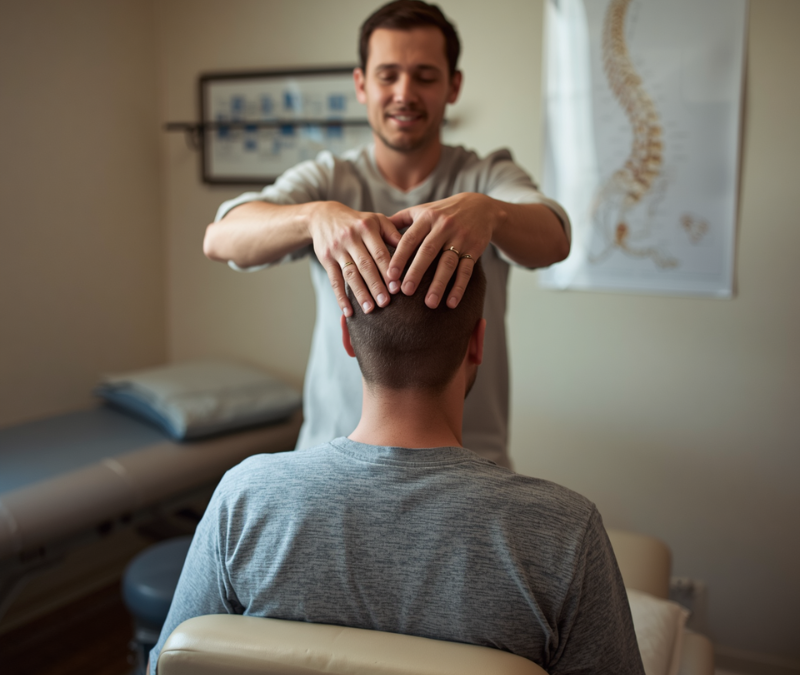
Dynamic Brain Healing™ Level 1 trains practitioners to assess and address fascia of the cranium and upper cervical spine as one identifiable, testable contributor to persistent post-concussion presentation, built on a “less is more” protocol philosophy rather than a growing stack of interventions. The course does not present this as a replacement for medical evaluation, return-to-play protocols, or psychological care where indicated. It is training in one specific, underused assessment and treatment domain, intended to sit inside a multidisciplinary plan, not outside of it.
Every participant completes a Brain Health Assessment as part of the training, establishing a personal baseline before learning to establish one for a client, alongside supervised case study work required for certification.
Measurable Outcomes and Reassessment
The course is structured around measurement rather than testimonial: baseline Brain Health Assessment data, defined reassessment points, and case studies practitioners complete and submit as a certification requirement rather than a formality. What “improvement” means is defined before the session starts, using the same measures checked afterward — range of motion, symptom inventory, and functional markers relevant to the presenting case.
A single study is a signal. A pattern across guidelines is a reason to look closer.
Who the Tampa Training Is For
Physical therapists, athletic therapists, chiropractors, manual therapists, dentists, and strength and performance professionals working with concussion and mTBI cases — particularly those already managing patients whose symptoms have moved past the standard recovery window and who need an additional, testable assessment layer rather than another intervention added to an existing list.
Verified Course Details
- Program: Dynamic Brain Healing™ Level 1
- Location: Tampa, Florida
- Dates: September 18–20, 2026
- Format: 16 hours online pre-work + 32 hours live in-class immersion + 10 hours case study and clinical application, bundled as one program
- Tuition: $2,545 USD + tax; payment plan available
- Certification requirement: completed case studies
Next Step
Review eligibility and register for Dynamic Brain Healing™ Level 1 in Tampa, FL — September 18–20, 2026.
Save Your Seat — Tampa, September 2026
Frequently Asked Questions:
Why do some concussion patients not recover within the standard 4–6 week window?
Systematic reviews estimate that roughly 10% to 30% of patients with mild traumatic brain injury develop persistent post-concussion symptoms beyond the typical recovery period. Contributing factors vary by patient, and current guidelines identify cervical, vestibular, and visual dysfunction as commonly under-assessed domains in these cases.
Is cervical spine involvement common in persistent post-concussion symptoms?
Current concussion guidelines, including the Amsterdam Consensus Statement and Ontario’s Living Concussion Guidelines, identify cervical dysfunction as a recognized contributor requiring specific clinical assessment in patients with prolonged symptoms. It is one of several domains guidelines recommend evaluating, not a standalone diagnosis.
Does Dynamic Brain Healing™ replace medical management of a concussion?
No. Dynamic Brain Healing™ is a practitioner training program in cranial and cervical fascia assessment intended to complement, not replace, medical evaluation, return-to-activity protocols, and other indicated care within a multidisciplinary plan.
Who is eligible for Dynamic Brain Healing™ Level 1?
The course is designed for licensed healthcare professionals and performance staff, including physical therapists, athletic therapists, chiropractors, manual therapists, dentists, and strength coaches operating within their legal scope of practice.
What do I need to complete before attending the live Tampa training?
Participants complete 16 hours of online training before the 3-day live, in-person session in Tampa. Certification requires supervised case study submission following the live training.
References
Medical, Educational, and Scope Disclaimer
This article is intended for licensed healthcare professionals and is provided for professional education purposes. It does not constitute medical advice, diagnosis, or treatment, and is not a substitute for individualized clinical evaluation. Dynamic Brain Healing™ is a practitioner training program; it is not a treatment claim, and outcomes vary by case, practitioner skill, and patient presentation. Practitioners must operate within their jurisdiction’s legal scope of practice.