AI Can Detect a Concussion Through Your Voice. That Is Extraordinary. It Is Also Not Enough.
Three concussions, three different sportsOVW referee Dallas Edwards was diagnosed with a concussion and subdural hematoma after 45 seconds of visible seizure went unrecognised during a live match. NHL prospect Igor Chernyshov fell twice attempting to rise after a head impact — the assessment that followed sent him to hospital. Olympic champion Johannes Klaebo sustained a concussion in a sprint crash in Drammen, Norway. All three injuries were confirmed after the fact. None were identified in real time with sufficient speed to prevent secondary risk. |
AI concussion detection has just taken a major leap forward — and it raises a question that the sports safety community must answer: is faster diagnosis the same as better protection?
I watched a sideline medic run a concussion assessment last season. Twelve seconds. Three questions. The athlete answered clearly — he had a headache, yes, but felt fine otherwise, he said. He was cleared. He did not play again for six weeks. The injury was real. The assessment had been a symptom questionnaire delivered to a brain that had just been disrupted.
We have, for decades, been asking injured brains to assess themselves. The system has known this was inadequate and has had very few better options. That is about to change.
An AI tool that detects brain injury through a single word spoken into an app. Ninety percent accuracy. Results in seconds. This is not incremental progress. This is a different category of tool entirely. |

The Breakthrough: What the FIU Research Has Built
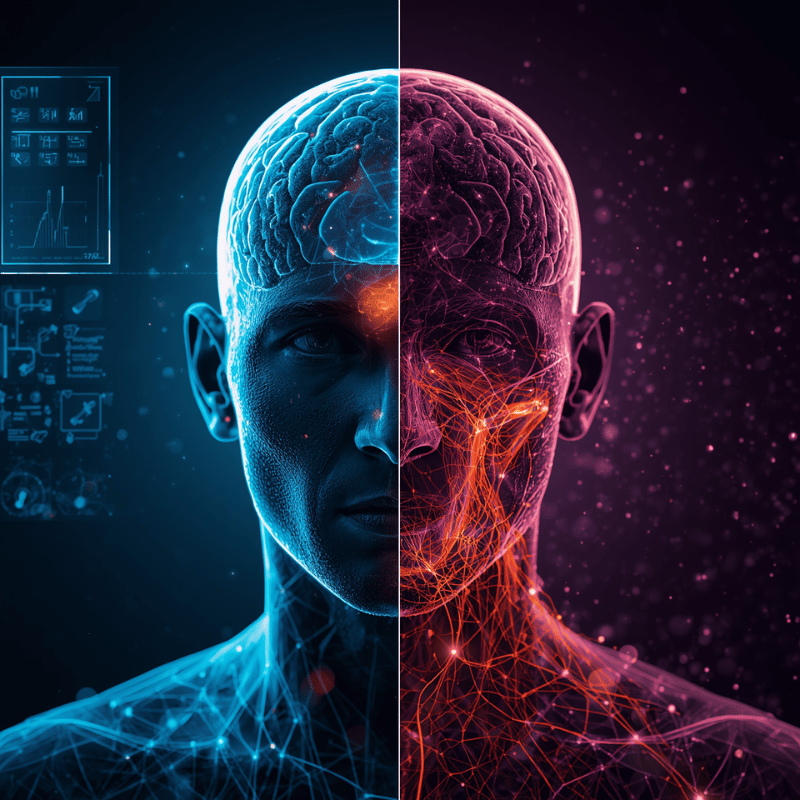
Researchers at Florida International University have developed an AI diagnostic tool that detects concussion through subtle changes in the acoustic properties of speech — changes in amplitude, frequency, vibration, and phonetic characteristics that are imperceptible to the human ear but detectable by machine learning models trained on hundreds of athletes across multiple sport types.
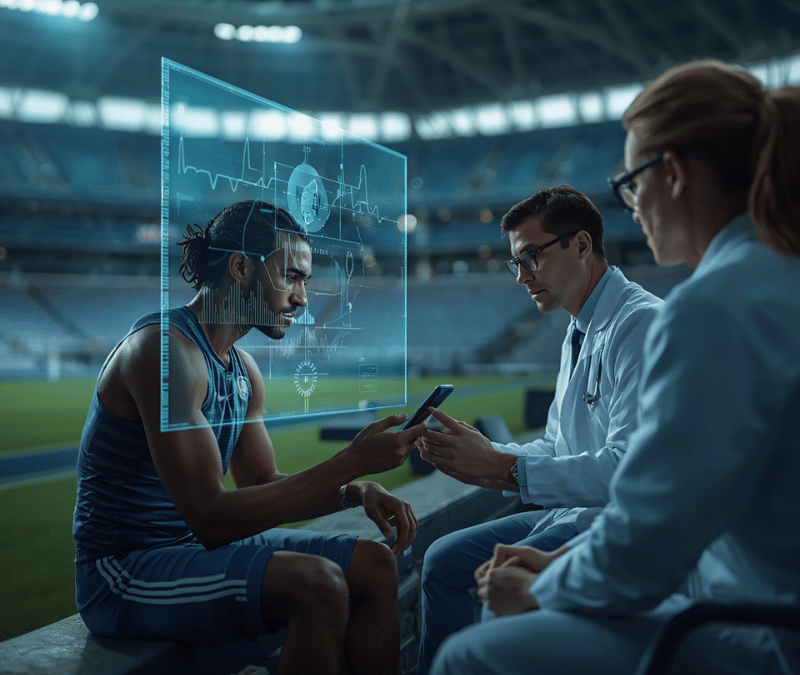
The mechanism is elegantly practical. Each athlete records a baseline voice sample during the pre-season — a single word or standardised sound captured on an app. In the event of a suspected head injury during competition or training, the athlete repeats the sample. The AI compares the acoustic signature against the personal baseline and returns a severity classification in seconds: mild, moderate, or severe. The system is personalised — comparison against the individual’s own baseline rather than population norms — which eliminates the confounding variables that make population-norm assessments unreliable for athletes at the extremes of performance.
The current accuracy rate exceeds 90%. The research group is working to identify the single word or sound that provides the most discriminating acoustic signal, which would further simplify implementation. The vision is a pre-season baseline, an app available to every athletic trainer, and a 15-second post-incident assessment that provides objective severity data before any return-to-play decision is made.
Why This Matters — The Scale of What It Addresses
To understand why this technology represents a genuine leap, the current baseline must be clearly stated. More than 50% of concussions in the United States go undiagnosed. Roughly 70% of those concussions occur in sports settings. The standard sideline assessment in most competition environments at most levels remains a brief symptom questionnaire — asking an athlete with a potential brain injury whether they feel dizzy, whether they have a headache, what day it is.
The Dallas Edwards incident this week illustrates the consequences of this baseline in their most extreme form. A 22-year-old referee sustained a blow to the head, lost consciousness, and seized for 45 seconds before the match was stopped. The people in the ring were not negligent — they were unequipped. They had no objective tool for distinguishing a planned fall from a neurological event. OVW co-owner Al Snow acknowledged in his statement that the person who would normally assess such a situation was the person who needed the assessment.
A voice-based AI tool running on a tablet at ringside would not have prevented the initial injury. It would have provided an objective signal within seconds that the person on the mat was experiencing neurological disruption — enabling the people in the room to act on data rather than interpretation.
What the Technology Cannot Do
Detection is not prevention. Diagnosis is not protection. These distinctions are not qualifications of the technology’s value — they are the frame within which its value must be understood.
The FIU tool detects that damage has occurred. It does not reduce the probability that damage will occur. In a week when three athletes across three sports sustained brain injuries within 72 hours, and in a research landscape where 72,000 first-time TBI cases in children and young adults show a 37% repeat injury rate, the question of prevention must receive at least equal attention to the question of detection.
Igor Chernyshov was 20 years old on his first shift back from the AHL when he sustained a concussion after a high contact with Mike Matheson. The hit was not called a penalty. The speed of the play, the position of the athletes, and the forces involved were the product of a contact sport environment. Better detection would have confirmed the diagnosis more rapidly. Better preparation of the connective tissue architecture around his cervical spine and cranium — which is trainable and which affects how that impact moves through the body — is where prevention lives.
The Fascial Preparation Gap
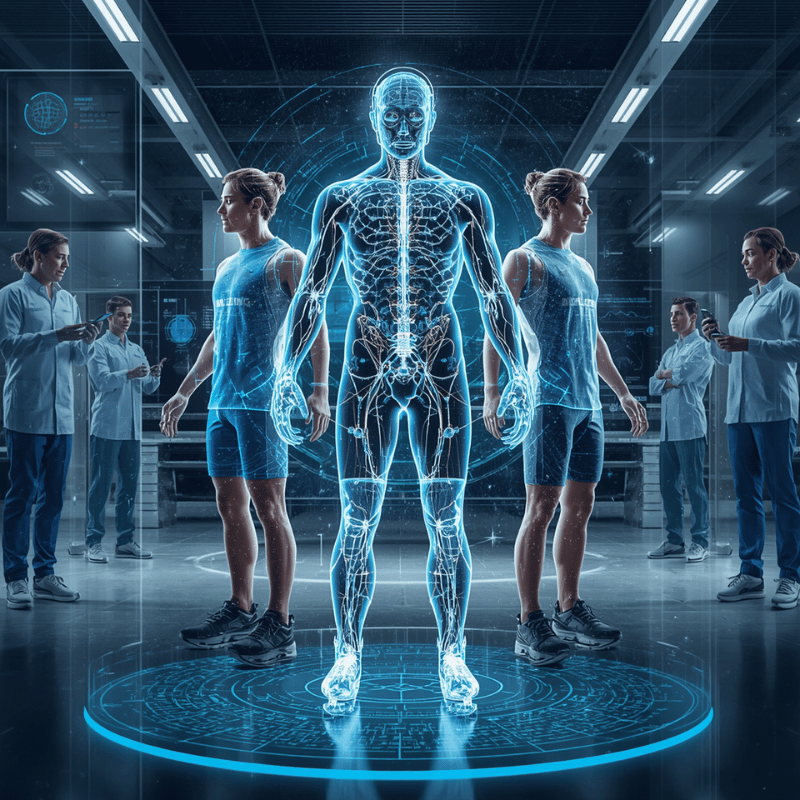
The fascial system — the meningeal layers, the cervical fascia, the broader myofascial network — forms the mechanical envelope around the central nervous system. It is the connective tissue architecture that absorbs, distributes, and attenuates mechanical forces before they reach the brain. An athlete whose fascial system is well-conditioned, well-hydrated, and mechanically responsive does not receive a head impact the same way as one whose connective tissue is rigid, restricted, or dehydrated.
The biophysics are measurable. The fascial system’s viscoelastic properties — its capacity to store and release mechanical energy, to distribute force across multiple planes rather than transmitting it directly — change with training status, hydration, and recovery quality. A trained fascial system is protective before the hit. No diagnostic technology, however sophisticated, provides protection at the moment of impact. Only the state of the body’s protective architecture at that moment does.
At the Fascia Training Institute, we have spent years making the case that the prevention conversation in contact sport must extend beyond equipment and protocols into the biological preparation of the body itself. The fascial system is the most powerful protective mechanism available to athletes before contact — and it is the most systematically untrained.
The Integration Argument
The institutions that will genuinely advance athlete safety over the next decade will not choose between better diagnostics and better preparation. They will pursue both — with the understanding that each layer of protection addresses a different moment in the injury timeline. Fascial preparation reduces the probability and severity of injury at impact. Better sideline diagnostics reduce the probability of mismanagement post-impact. HPA axis monitoring and cortisol rhythm assessment reduce the probability of prolonged recovery post-diagnosis.
Johannes Klaebo wrote from his hospital bed: only got one head, so have to take good care of it. That sentence contains the entire argument. The sports safety conversation has been focused on what happens after the damage occurs. The Fascia Training Institute’s position is that the most important protection happens before — in training rooms, in preparation protocols, and in the biological architecture of the athlete who walks onto the field.
The FIU voice analysis technology is a landmark development. It deserves to be adopted as widely and rapidly as possible. And every institution that adopts it should simultaneously be asking: what are we doing to reduce the need to use it? Detection without prevention is triage without strategy. The future of sports safety requires both — integrated, simultaneous, and built on the same understanding of the athlete as a complete biological system.
| Take the free quiz: Is Your Athlete’s Brain Truly Recovered? Download the free Neurofascial Release Guide — Simone Fortier · Founder, Fascia Training Institute™ · Creator, Dynamic Brain Healing™ |