
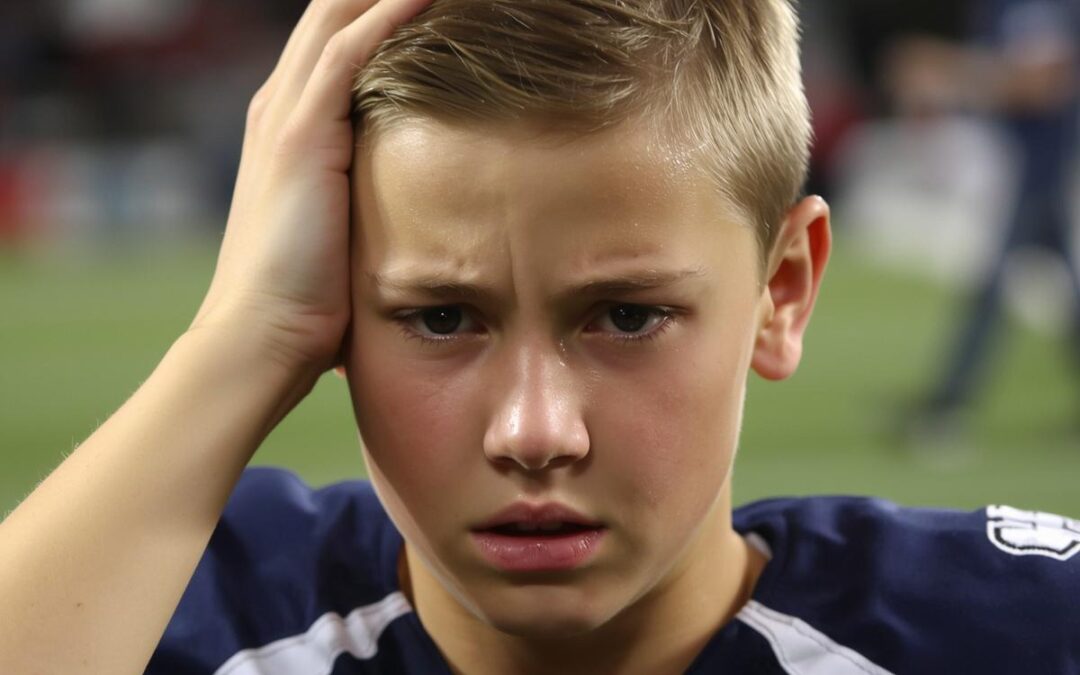
The Youth Sport Brain Injury Crisis: What 72,000 Cases Tell Us This Week
BREAKING THIS WEEK — Three brain injuries in 72 hours of professional sportOVW referee Dallas Edwards, 22, suffered a concussion and subdural hematoma after being struck mid-match in Louisville on March 12. He convulsed in the ring for 45 seconds before the match was stopped. He remains in intensive care. NHL prospect Igor Chernyshov, 20, sustained a concussion on his first shift after recall on March 14 — falling twice attempting to stand, blood on the ice. Olympic champion Johannes Klaebo suffered a concussion at the Drammen World Cup sprint on March 12, missing Holmenkollen and facing uncertain World Cup Finals participation. |

Youth sport brain injury has reached a scale that equipment standards and return-to-play protocols alone cannot address. This week proved it again.
Three athletes across three different sports sustained brain injuries within 72 hours. One of them, a 22-year-old referee, lay convulsing in a professional ring while a match continued around him. Another, a 20-year-old NHL prospect in his first shift back from the AHL, fell twice trying to get off the ice under his own power. The third, the most decorated Winter Olympian alive, posted a thumbs-up from a hospital bed after his head hit the snow in a sprint semifinal.
These are not unusual events. They are the baseline. And they happen against the backdrop of research that should have already changed how every sports institution prepares its athletes.
Symptom resolution and neurological recovery are not the same event. The science is now unambiguous on this point — and sport systems have not caught up. |
The Research That Reframes Everything
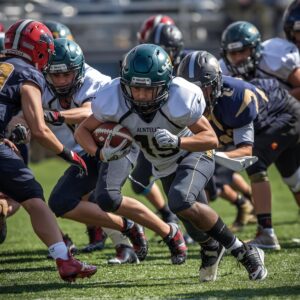
A study submitted to the American Academy of Neurology’s 78th Annual Meeting in April 2026 reviewed 72,025 first-time sports-related traumatic brain injury cases in individuals aged 25 and under. The findings are not ambiguous. Youth football accounts for nearly one in every five TBIs in this population — 19% of all cases. Soccer follows at 11%, basketball at 10%, cycling at 7%. The average age at first injury is 14 years old.
More than one in three football players who sustained a TBI went on to sustain a repeat injury — a 37% repeat rate that reflects not individual misfortune but systemic failure. The documented consequences include a 23% higher risk of chronic headaches and elevated risks of visual impairment. These are the outcomes science can currently measure. The long-term neurological, cognitive, and behavioural sequelae are still being written by longitudinal studies whose subjects are not yet old enough to tell the full story.
These are developing brains. Not adult brains with decades of neurological reserve. Brains in the most architecturally sensitive period of their entire existence — myelinating white matter tracts, establishing prefrontal-limbic connectivity, building the infrastructure that will govern decision-making, emotional regulation, and cognitive function for the rest of a human life.
What Dallas Edwards Tells Us About Institutional Readiness
When OVW referee Dallas Edwards seized on the mat on March 12, the match continued for 45 seconds. A wrestler dragged him to the edge of the ring. Another moved him with his foot. His mother, watching the footage from outside the venue, later told reporters: ‘Nobody stopped the match. They are wrestling over top of my child as he seizes.’
OVW co-owner Al Snow issued a statement acknowledging that the match featured twelve men, two run-ins, and two planned referee bumps — and that the communication breakdown was structural, not malicious. The person who would normally assess whether an in-ring injury was real or scripted was the person who needed the assessment. The system had no fallback.
Dallas Edwards, from his hospital bed, asked not for donations but for training. His exact words: he wanted his fellow workers to get training in assisting another’s life, to be educated in all scenarios relating to injury, illness, or condition in the ring. That is not a request for sympathy. That is a precise diagnosis of the institutional gap that put him in intensive care.
The person responsible for recognising a brain injury was the one who had just sustained it. The system had no fallback. This is not an OVW problem. It is a sport-wide problem. |

What Klaebo’s Response Teaches About Elite Safety Standards
Johannes Klaebo, the 11-time Olympic gold medallist who had set a record six weeks earlier at Milan-Cortina 2026, fell backward and hit his head on the snow during a sprint semifinal in Drammen on March 12. He did not race the Holmenkollen 50km — one of the most prestigious events in his sport — the following Saturday. His team doctor stated it was too early to determine World Cup Finals eligibility and that progress would be monitored closely before any decision.
Klaebo himself wrote: ‘Only got one head, so have to take good care of it.’ He is 27 years old, at the peak of his career, with every competitive incentive to return quickly. He did not. His medical team did not allow it. That is what appropriate institutional response to a brain injury looks like — and it stands in sharp contrast to the systems that cleared athletes on symptom checklists and moved on.
The Layer Most Institutions Are Missing
At the Fascia Training Institute, the prevention conversation has always extended beyond equipment and protocol into the biological preparation of the body before contact. The fascial system — the connective tissue matrix that envelops every structure in the body including the brain — absorbs and distributes mechanical force through the entire kinetic chain. Its integrity directly influences how impact energy reaches the cranium.
A well-conditioned fascial system does not receive a hit the same way as an undertrained, dehydrated, or restricted one. This is biophysics. And it is trainable at every age — with the developmental years representing the most plastic and responsive window available. Almost no youth sport programme in the world is currently including structured fascial training in its preparation protocols.
The prevention conversation in youth sport must expand to include: how the body is being prepared before contact, whether the fascial architecture that absorbs and distributes impact is being conditioned, and whether the HPA axis function and neurological readiness that determines recovery trajectory is being assessed before the season begins.
The Standard We Must Hold
Three brain injuries in 72 hours. One in intensive care with a subdural hematoma. One on a flight from Montreal to Ottawa after being discharged from hospital. One choosing not to race at Holmenkollen because his team understands that one head is worth more than one race.
The research has spoken. The news has illustrated it in real time. The question for every sports director, association, coach, and institution reading this is not whether the problem is real. It is whether the response is adequate.
The Fascia Training Institute exists to close the gap between what the science knows and what sport systems are doing. The Brain Recovery Series is our contribution to the conversation. The practitioner training programme is our investment in the people who treat these athletes. And the prevention framework is our answer to the question every parent of a 14-year-old contact sport athlete deserves to have answered: what are you doing — beyond the protocol — to protect this brain?
| Take the free quiz: Is Your Athlete’s Brain Truly Recovered? Download the free Neurofascial Release Guide Read the full Brain Recovery Series Learn more about our practitioner training programme — Simone Fortier · Founder, Fascia Training Institute™ |