
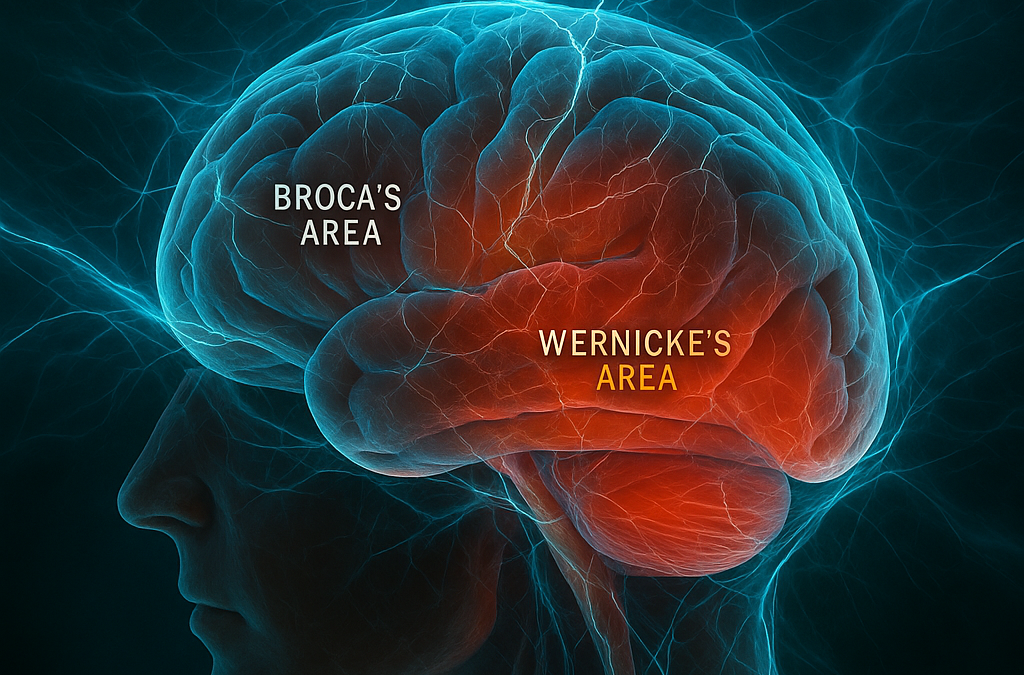
The Hidden Force Behind Brain Fog, Speech Issues, and Slow Recovery: How Fascial Compression on the Cranium Creates Tensional Drag on the Brain
For decades, neuroscience searched for answers inside the brain while ignoring one of the most influential structures around it: the fascia.
Modern fascia research — combined with quantum biology, biotensegrity, and clinical observations from concussion recovery — now reveals a truth that changes everything:
**Fascia doesn’t just surround the brain.
It shapes the way the brain moves, communicates, and heals.**
When the fascial layers around the cranium become compressed, dehydrated, or injured, they can create what scientists call tensional drag — a force that literally pulls, distorts, or restricts the brain and brainstem.
This tensional drag can disrupt speech, slow processing, affect balance, alter emotional regulation, and create the symptoms so many people live with without answers.
Let’s break down how it happens — and why it matters.
The Fascia-Brain Connection: A Living, Intelligent Matrix
The cranium isn’t a rigid helmet. It’s a dynamic pressure dome lined and wrapped in fascia — a continuous, fluid-crystal network that connects:
- the scalp
- the cranial sutures
- the meninges (dura, arachnoid, pia)
- the spinal fascia
- the facial and jaw fascia
- the vagus and cranial nerves
- the entire central nervous system
Fascia is not passive.
It’s responsive, contractile, conductive, and communicative.
In quantum biology, fascia behaves like a liquid crystalline matrix, capable of:
✔ transmitting mechanical forces
✔ conducting biophotons
✔ storing memory
✔ influencing neurological signaling
✔ shaping perception and behavior
So when fascia is healthy, hydrated, and elastic, the brain can “float” and self-regulate.
When injured, everything changes.

How Fascia Becomes Compressed — and Why It Creates Force on the Brain
Fascia around the cranium can compress for many reasons:
Physical Trauma
- concussion
- whiplash
- falls
- sports impacts
Emotional Trauma
The fascia contracts defensively — a “bracing” or “freeze” pattern.
Chronic Stress / Fight-or-Flight
Cranial fascia tightens, especially the dura and scalp fascia.
Posture & jaw tension
Forward head posture, grinding, clenching → fascial tension through temporal lines.
Birth trauma
Forceps, pressure, C-section compression.
Inflammation & dehydration
Fascia thickens, loses glide, and stiffens like a dried sponge.
When fascia densifies, it stops behaving like a buoyant support structure and becomes:
- sticky
- stiff
- fibrotic
- dehydrated
- restrictive
And this is when tensional drag begins.
What Is Tensional Drag — and How Does it Affect the Brain?
Tensional drag is a mechanical pulling force caused by unhealthy fascia.
It’s not subtle.
It’s not “in your head.”
It is real physics.
Imagine the brain suspended in a web.
If one part of the web tightens, the entire system shifts.
In the cranium:
- fascia can pull on the dura
- the dura can pull on cranial nerves
- cranial nerves can alter speech, balance, vision
- the brain itself may be slightly displaced
- blood and CSF flow can be disrupted
- neural firing becomes energetically expensive
This drag changes how the brain processes and outputs information.
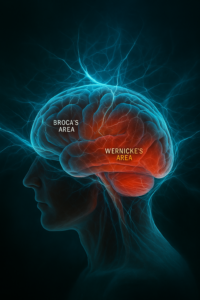
How Tensional Drag Specifically Affects Speech
Speech depends on precise timing between:
- Broca’s area (speech production)
- Wernicke’s area (language comprehension)
- motor cortex
- vagus nerve
- breathing rhythm
- jaw, tongue, and diaphragm fascia
When fascial compression tugs on the dura near these centers, or restricts cranial bones, or alters CSF dynamics, it can cause:
✔ Word-finding difficulty
✔ Slurred speech when fatigued
✔ Stuttering or hesitations
✔ Difficulty initiating speech
✔ Slowed processing
✔ Losing train of thought mid-sentence
✔ Feeling like “thoughts are trapped but not coming out”
This is not cognitive.
It is mechanical and neurological.
The fascia has placed the brain — and therefore speech — under tension.
The Quantum Biology Perspective: Why This Matters
At a quantum level, fascia conducts:
- electrical signals
- biophoton emission
- mechanotransduction
- vibrational communication
When fascia is tense or dehydrated:
- electrical signals become noisy
- the brain requires more energy to function
- gamma wave coherence decreases
- hemispheric communication slows
- speech centers “misfire” or go offline
In essence:
A compressed fascia system lowers the brain’s signal strength.
Speech depends on clear signal flow.
Once fascia releases → coherence returns → words return.

Why Traditional Approaches Miss This Completely
Most concussion and trauma protocols focus only on:
- the brain
- the neck
- the vestibular system
- the jaw
- cognitive therapy
But the fascia system — the container that holds the brain — is never addressed until Dynami Brain Healing.
You cannot fix brain function without restoring the environment it lives in.

What Happens When Fascia is Released
When cranial fascia is restored through advanced methods like Dynamic Brain Healing™ and Quantum NeuroFascial Release™, the brain experiences:
- Mechanical decompression
- Improved blood flow
- Improved CSF movement
- Increased electrical coherence
- Calmer nervous system
- Easier speech
- Faster word retrieval
- Increased processing speed
- Relief from brain fog
- Emotional stability
Clients often say:
“It feels like my brain can breathe again.”
That’s tensional drag releasing.
This Is the Missing Link
Whether someone is dealing with:
- concussion
- ADHD
- trauma
- chronic stress
- speech issues
- fatigue
- emotional overwhelm
The fascia around the brain is often the forgotten root cause.
When you restore fascial freedom →
you restore neurological freedom.
The brain doesn’t need more pressure.
It needs space.
And fascia is the key to giving it back.