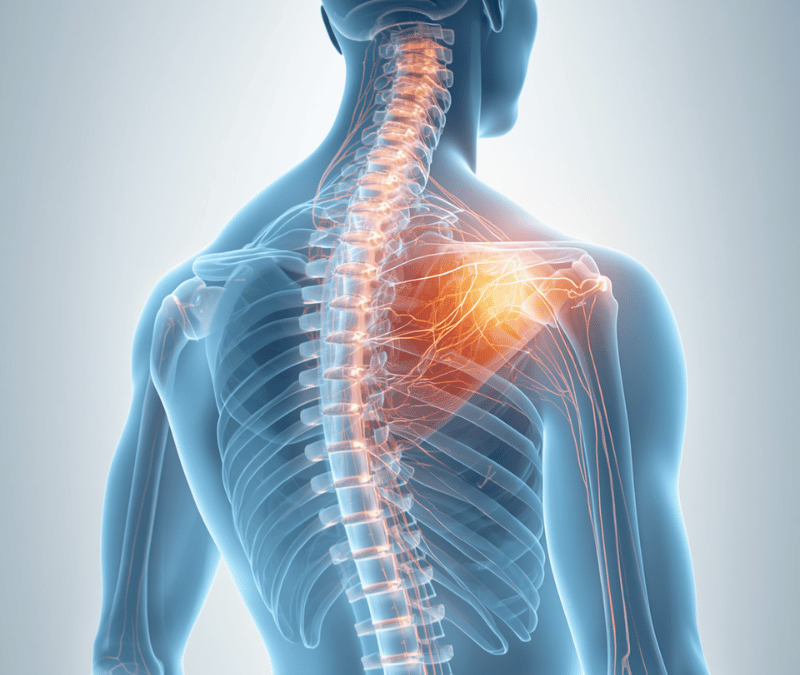
Frozen Shoulder Is Not a Shoulder Problem: What Modern Fascia Science Reveals About Adhesive Capsulitis
For decades, frozen shoulder has been treated as a local orthopedic condition.
The shoulder becomes painful.
Motion decreases.
The capsule tightens.
Stretch it.
Inject it.
Manipulate it.
Wait.
Yet many individuals continue to experience months—or years—of pain, restriction, disrupted sleep, and loss of function.
The question is not whether the shoulder is involved.
The question is why the shoulder stopped moving normally in the first place.
Modern research in fascia, mechanobiology, pain neuroscience, and connective tissue physiology is changing how clinicians understand adhesive capsulitis.
Frozen shoulder is increasingly recognized as a condition involving tissue remodeling, inflammation, nervous system adaptation, vascular changes, altered movement behavior, and fascial restriction.
It is not simply a shoulder problem.
It is a systems problem.
The Body Is Constantly Remodeling
The human body is not static.
Every experience changes tissue.
Every injury changes tissue.
Every movement changes tissue.
Every inflammatory event changes tissue.
The connective tissue system continuously adapts to the environment it experiences.
This process is known as mechanoadaptation.
Fibroblasts—the primary cells responsible for maintaining connective tissue—constantly respond to mechanical forces, inflammation, stress hormones, metabolic changes, oxygen availability, and movement patterns.
Healthy fascia is adaptable.
It glides.
It transmits force efficiently.
It communicates information throughout the body.
When conditions change, fascia changes.
And when fascia changes, movement changes.
Why Fascia Matters
Fascia is no longer viewed as simple packing material.
Research over the past two decades has transformed our understanding of connective tissue.
Fascia is now recognized as one of the body’s most densely innervated sensory systems.
It contains mechanoreceptors, nociceptors, proprioceptors, autonomic nerve fibers, immune cells, vascular structures, and highly responsive fibroblasts.
In many ways, fascia functions as both a communication system and a force-transmission system.
Every movement, every load, every injury, and every restriction creates information that travels through this network.
The brain does not interpret muscles separately from fascia.
The nervous system receives information from the entire system simultaneously.
Movement is a brain-fascia event.
Not simply a muscular event.
What Happens During Frozen Shoulder?
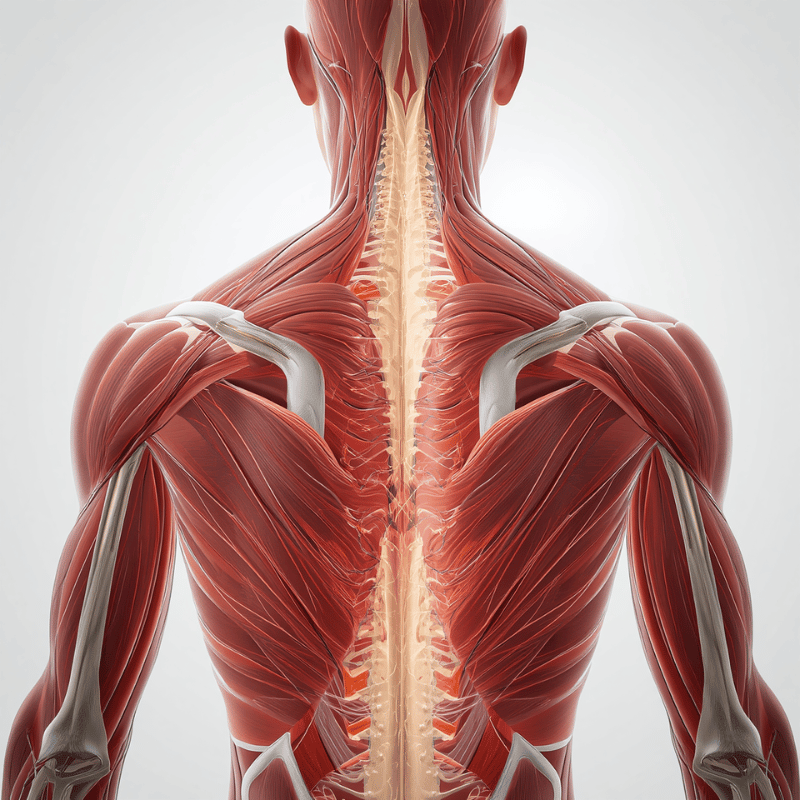
Adhesive capsulitis affects approximately 3–5 percent of the population and occurs most frequently in women between the ages of 40 and 70.
The condition is characterized by progressive loss of both active and passive shoulder motion.
Historically, clinicians focused primarily on capsular tightness.
Today we know much more.
Research demonstrates increased inflammatory signaling, fibroblast proliferation, collagen remodeling, and excessive extracellular matrix deposition within affected tissues.
Transforming Growth Factor-Beta (TGF-β), among other inflammatory mediators, appears to play a significant role in driving fibrosis and contracture.
The result is a tissue environment that becomes progressively less adaptable.
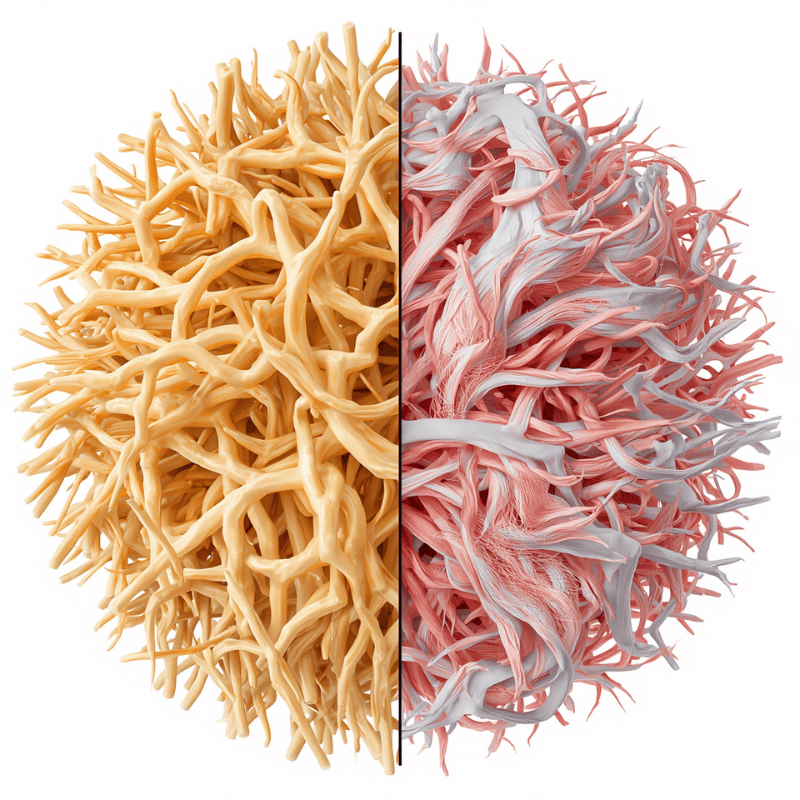
Collagen fibers become increasingly disorganized.
Cross-linking increases.
Tissue glide decreases.
Movement becomes more difficult.
Pain increases.
Protection increases.
The cycle accelerates.
The Missing Piece: The Brain
One of the greatest misconceptions in rehabilitation is the belief that pain is created solely by damaged tissue.
Modern neuroscience demonstrates otherwise.
Pain is an output of the nervous system.
The brain continuously evaluates incoming sensory information and determines whether protection is required.
When movement becomes painful, the nervous system often responds by limiting movement.
This protective strategy is initially useful.
Over time, however, it can become part of the problem.
The individual moves less.
The shoulder receives less variability.
Tissue loading decreases.
Joint nutrition decreases.
Connective tissue adaptation changes.
Motor patterns become increasingly protective.
The nervous system begins prioritizing protection over movement.
The result is a self-reinforcing loop:
Pain.
Protection.
Reduced movement.
Increased restriction.
More pain.
Many frozen shoulders are trapped within this cycle long before significant structural changes become visible.
Trauma Changes Tissue
Frozen shoulder frequently develops following:
- Falls
- Motor vehicle accidents
- Surgical procedures
- Rotator cuff injuries
- Repetitive strain
- Prolonged immobilization
Trauma creates more than tissue damage.
It creates adaptation.
Inflammatory responses alter connective tissue behavior.
Fibroblasts become activated.
Collagen production changes.
Protective movement strategies emerge.
The body attempts to create stability.
Unfortunately, excessive stability often comes at the cost of mobility.
What begins as protection may eventually become restriction.
The Role of Hypoxia
Emerging research suggests localized tissue hypoxia may contribute to adhesive capsulitis.
Hypoxia refers to reduced oxygen availability within tissues.
When movement decreases, circulation often decreases.
When circulation decreases, tissue metabolism changes.
Fibroblasts respond differently.
Collagen organization changes.
Healing becomes less efficient.
The result can be progressive shortening and thickening of connective tissue structures.
This is one reason movement remains one of the most powerful biological inputs available to the human body.
Movement is not merely exercise.
Movement is information.
Genetics May Influence Risk
Research investigating adhesive capsulitis has identified potential involvement of connective tissue proteins such as Tenascin-C and Fibronectin-1.
These proteins play critical roles in tissue remodeling, wound repair, extracellular matrix organization, and fibrosis.
Some individuals may possess a greater biological tendency toward excessive connective tissue contracture following injury or inflammation.
This may help explain why two individuals can experience similar injuries while achieving dramatically different outcomes.
The tissue response matters.
Not simply the injury itself.
Why Certain Conditions Increase Risk
Frozen shoulder occurs more frequently in individuals with:
- Diabetes
- Hypothyroidism
- Parkinson’s disease
- Stroke
- Cardiovascular disease
- Autoimmune conditions
- Cancer treatment histories
At first glance these conditions appear unrelated.
They are not.
Many share common physiological characteristics:
- Chronic inflammation
- Altered circulation
- Metabolic dysfunction
- Reduced movement variability
- Nervous system dysregulation
- Connective tissue remodeling
The shoulder becomes the expression of a broader systems challenge.
The Three Stages of Frozen Shoulder
Stage One: Freezing
Pain increases.
Motion decreases.
Sleep is often disrupted.
Inflammatory activity is typically highest during this phase.
Stage Two: Frozen
Pain may lessen.
Restriction becomes profound.
External rotation and abduction are commonly limited.
Activities of daily living become increasingly difficult.
Stage Three: Thawing
Movement gradually returns.
Recovery may occur over months or years depending upon the individual and intervention strategy.
Why Many Treatments Fail
Many interventions focus exclusively on the shoulder.
The body does not.
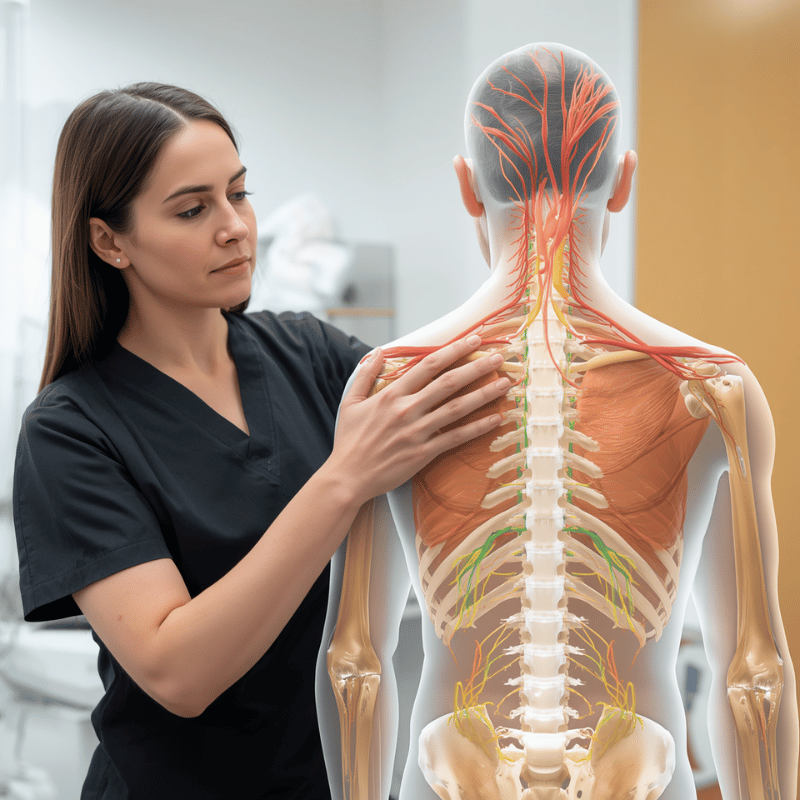
The shoulder is connected to:
- Cervical fascia
- Cranial fascia
- Thoracic fascia
- Rib mechanics
- Neural tension systems
- Vascular pathways
- Lymphatic drainage
- Central nervous system processing
A shoulder cannot function independently of the system supporting it.
Treating only the local symptom often produces limited results because the broader drivers remain unchanged.
A Systems-Based Approach
At the Fascia Training Institute, we teach practitioners to think beyond isolated structures.
The objective is not simply restoring range of motion.
The objective is restoring adaptability.
Adaptability within tissue.
Adaptability within movement.
Adaptability within the nervous system.
Clinical interventions may include:
- Fascial release approaches
- Movement restoration
- Joint mobility strategies
- Lymphatic optimization
- Neural decompression
- Sensorimotor retraining
- Regenerative medicine approaches
- Progressive loading strategies
The goal is simple.
Create the conditions that allow the body to move normally again.
When the system changes, the tissue changes.
When the tissue changes, movement changes.
When movement changes, function changes.
The Future of Rehabilitation
The future of rehabilitation does not belong exclusively to orthopedics, manual therapy, exercise, or neuroscience.
It belongs to integration.
The most successful clinicians will understand how connective tissue, the nervous system, circulation, inflammation, movement behavior, and mechanobiology interact as a single adaptive system.
Frozen shoulder is not merely a shoulder problem.
It is a visible expression of a system that has lost adaptability.
The question is not:
“How do we force more movement into the shoulder?”
The better question is:
“What conditions caused the system to stop adapting in the first place?”
That is where meaningful recovery begins.